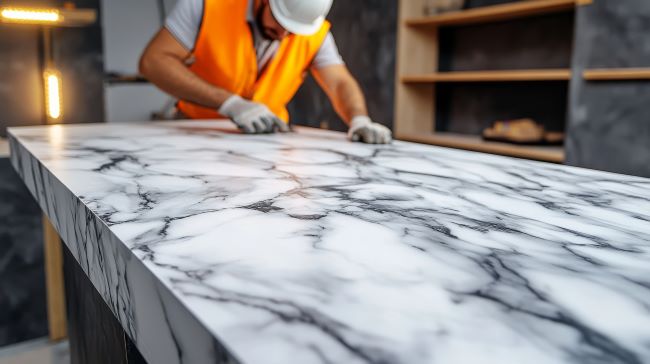
The International Surface Fabricators Association (ISFA) has issued a statement in response to the Western Occupational & Environmental Medical Association (WOEMA) petition urging Cal/OSHA to prohibit the fabrication and installation of engineered stone containing more than 1% crystalline silica.
While ISFA has deep respect for the medical community and shares in their commitment to worker health, ISFA does not support a blanket ban on engineered stone, and believes the conclusions presented in WOEMA’s petition do not fully reflect the operational, economic, and regulatory realities of the industry. Before California considers a prohibition that would reshape an entire sector of the construction and remodeling economy, ISFA is requesting an opportunity to understand how WOEMA concluded that engineered stone cannot be fabricated safely—even in shops fully compliant with Cal/OSHA’s existing silica standard.
A complete assessment requires:
- Clear separation of product hazard from employer non-compliance.
- Economic impact data on small and mid-sized fabrication businesses.
- A realistic analysis of workforce consequences.
- Understanding of supply chain and tooling transitions.
- Input from fabricators, manufacturers, and worker communities.
Additionally, ISFA believes that Australia’s policy model—the framework for California’s potential ban—is not directly transferable to the United States. The U.S.’ regulatory structures, enforcement capacity, market composition, and economic environment differ significantly, and ISFA believes that California must develop solutions based on American conditions, not assumptions drawn from another country’s framework.
A ban vs. enforcement and licensing
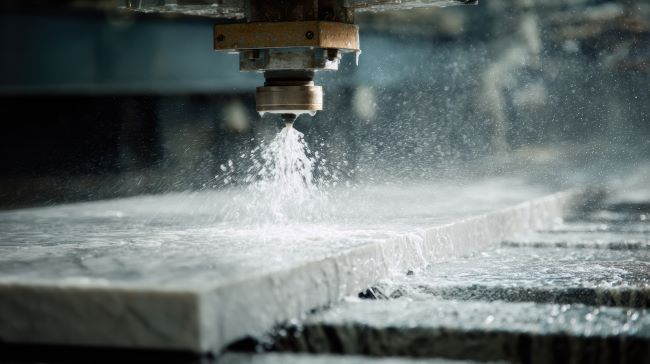
“ISFA does not believe a ban is the answer,” said CEO Laurie Weber. “The problem is not the material. The problem is employers ignoring the law, and a lack of enforcement resources to ensure compliance. California already prohibits dry cutting. California already requires controls. The issue is compliance, not the material.”
ISFA continues to advocate for and is actively developing a licensing standard with a verification system that:
- Licenses fabrication shops and installers.
- Verifies required training and compliance before materials are sold.
- Creates a public registry of approved, compliant shops.
- Provides Cal/OSHA and OSHA with stronger, practical enforcement tools.
- This approach aligns with ISO 45001, OSHA’s General Duty Clause, and evidence-based public health strategies that target unsafe practices without dismantling entire industries.
Across California and the U.S., most fabrication businesses have invested heavily in safe operations, including:
- Hundreds of thousands of dollars in engineering controls.
- Professional air monitoring.
- Comprehensive written exposure control plans.
- Regular training and retraining.
- Safety innovations that exceed regulatory requirements.
A blanket ban would punish the responsible employers who have done the right thing.
The economic consequences
WOEMA’s petition asserts that a prohibition would carry “no significant economic consequences” for fabrication businesses. ISFA strongly disagrees.
Hundreds of small businesses may be forced to close. Thousands of workers, many supporting multigenerational families, could lose their livelihoods. Retooling, retraining, and restructuring supply chains would impose enormous costs on the fabrication and supply channels.
ISFA also questions whether WOEMA has the economic expertise to make definitive claims about the financial impact on fabrication businesses.
Protecting workers and jobs
“Licensing, verified training, and stronger enforcement will clean up the industry without wiping out thousands of livelihoods,” said Weber.
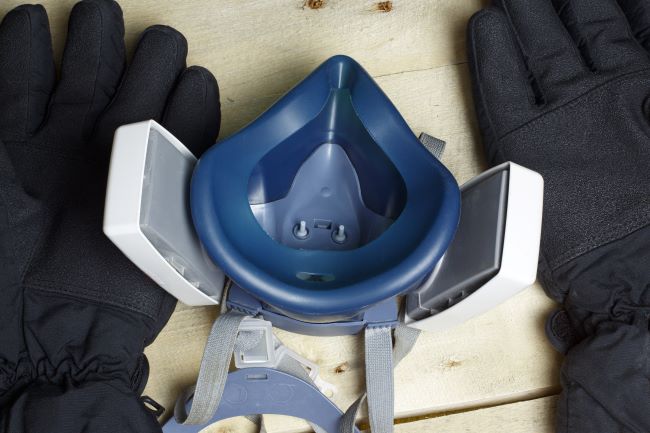
Silicosis is preventable. Safe fabrication is proven and achievable when employers comply with the law and enforcement is adequately supported. ISFA has extended an invitation to collaborate with WOEMA membership to expand worker outreach—particularly to Latino workers who are disproportionately affected by silicosis across construction industries.
ISFA proposes joint efforts to:
- Distribute Spanish-language safety materials and training from ISFA and Cal/OSHA.
- Bring silica safety resources directly into affected communities.
- Support ISFA and Cal/OSHA’s education through immediate, practical outreach.
- Strengthen trust and communication between medical professionals and fabricators.
- Research and explore new treatments that help stop progression and/or reverse the effects of silicosis.
- Develop a medical surveillance solution that offers valuable data.
“WOEMA’s members have access to the workers we are trying to reach,” Weber noted. “ISFA has access to the employers who need direction and accountability. Working together, we can close gaps fast and give workers and families the protection they deserve.”
About the International Surface Fabricators Association (ISFA)
The International Surface Fabricators Association (ISFA) is the national trade association representing the countertop and surface fabrication industry. Serving as the central voice for fabricators across the United States, it works directly with manufacturers, medical experts, researchers, and regulators to build a safer, more accountable industry. ISFA leads several major initiatives—including the Fabricator Safety Initiative, the ISFA Academy™, and the American Countertop Manufacturers Council—to bring facts, training, standards, and real-world solutions to a fast-changing environment, with a focus on transparency, collaboration, and evidence-based approaches that improve worker safety and support responsible business practices.