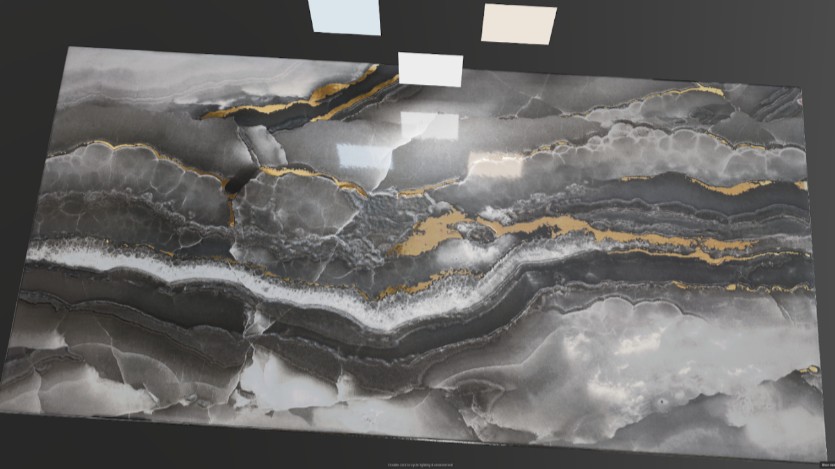
Las Vegas, Nevada – February 3, 2026 – Scanimate.io, demonstrated its capabilities in material scanning using physically-based rendering (PBR) at the recent TISE show here. The company showed how static photographs can be brought to life by replacing them with 3D viewers that allow users not only to rotate the sample and view it from different angles, but also to see and feel the subtle properties of the materials, similar to a video game, but with much greater accuracy.
The essence of the technology is to show clients not just a photograph, but to scan and display the visual and physical properties of the materials (PBR maps). An excellent example is the tile in the opening image. To display the characteristic waviness of its surface, it is necessary to digitize the changes in surface inclination for each pixel with an accuracy of 0.005 degrees (16-bit normal map). This process also authentically renders other properties such as metallicity, highlighting metals (to show the correct display of gold veins), and glossiness, which determines how each pixel on the material reflects light. Scanimate allows the client to feel the material, and “bring it to life,” seeing how it interacts with light when viewed from different angles and under different lighting conditions on any website, mobile phone, tablet, or PC.
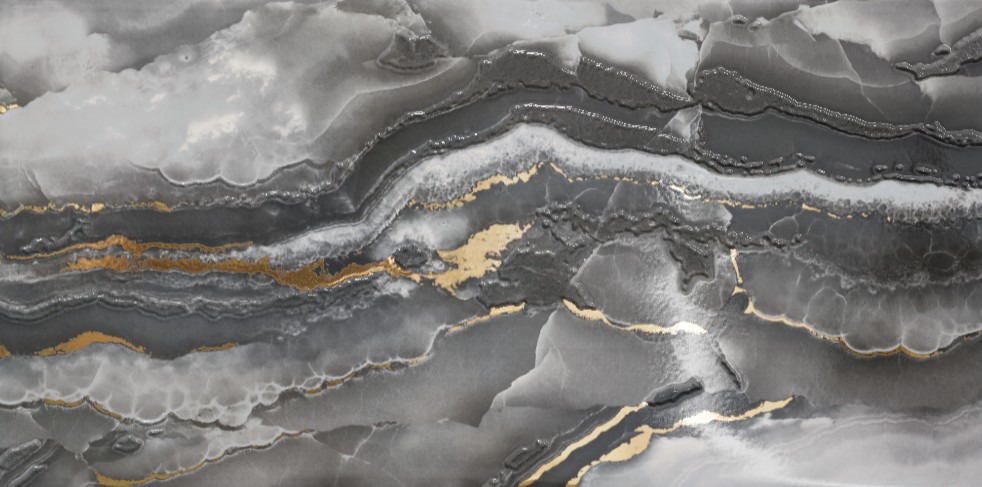
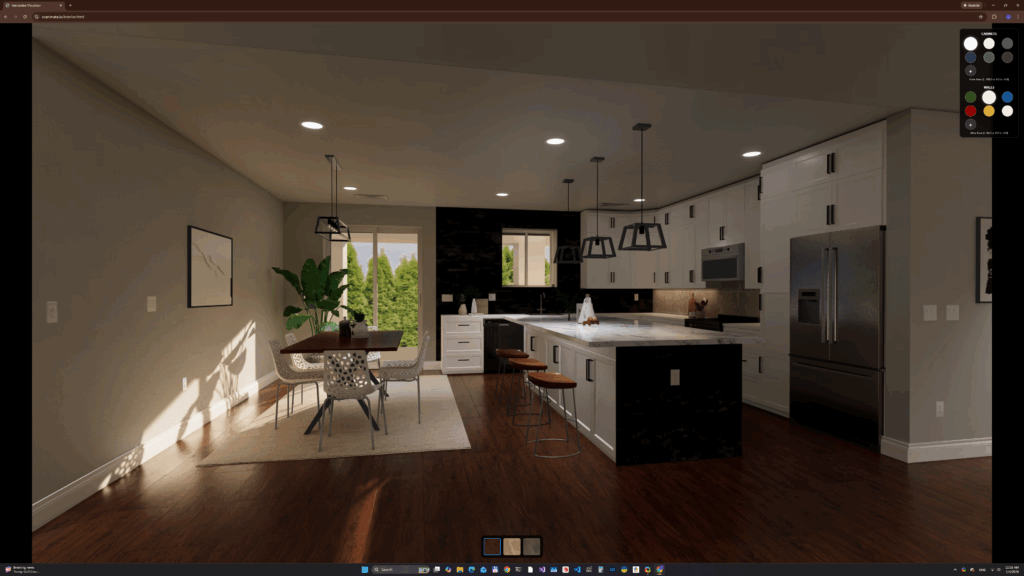
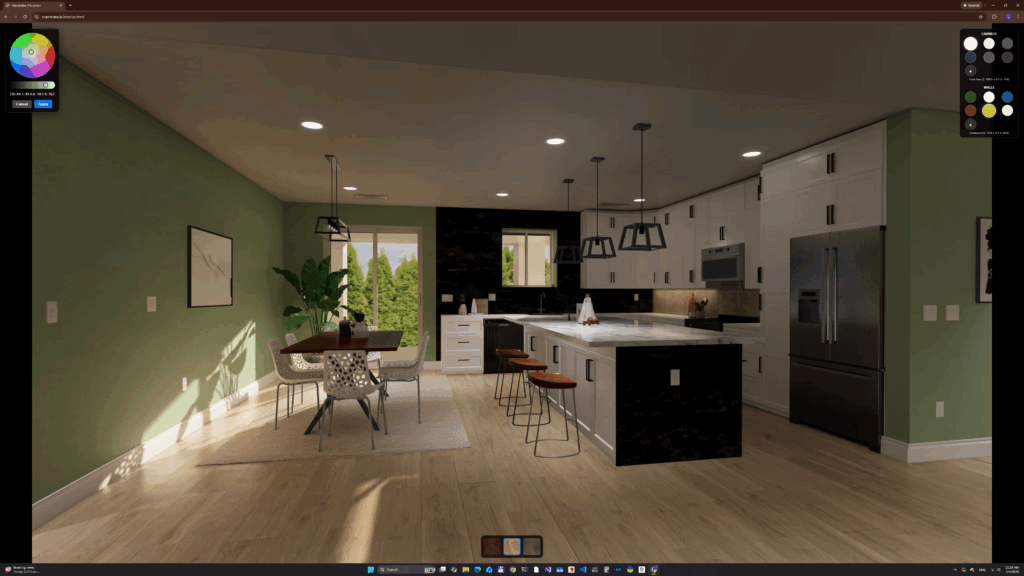
Scanimate solves this problem by using its own material property scanning technologies to create “digital twins,” and provides material viewers for websites, allowing users to view a sample separately or in an interior setting. These same scanned PBR materials can also be used for 3D visualization in professional editors.
The problem with modern AI-based image generators is that they can create beautiful pictures, but the materials depicted in them will not possess the same properties as the samples being shown. In most cases, the various properties of materials are completely unrelated to each other, so the AI has nothing to latch onto in order to display them correctly. Thus, at the moment, scanning is the only way to obtain accurate digital twins of samples and demonstrate them to online customers.
A legacy of innovation and resilience: Scanimate technology is based on deep technical expertise. Development began in Ukraine in 2017 by private entrepreneur Volodymyr Makovetskyi and was first applied in 2018 for scanning PBR materials for 3DCoat, a world-renowned digital modeling software. Later, his brother Olexandr joined the development team, focusing on scanning equipment. After the Russian invasion, they moved to the United States to ensure the safety of their innovations. Joining forces with David Ivaskevich, who is now the CEO, they founded Scanimate to develop ultra-precise scanners specifically for the construction industry.