
Respirators, eye protection, ear protection, footwear, HEPA vacuums and dust containment equipment are all important when working on tile projects. Artisan tile setters who create tile art pieces have some additional challenges to grapple with while honing their creations.
Maria Meyer, currently with Nichols Tile and Terrazzo Co., Inc., in Joelton, Tenn., serves as an assistant trainer for the Artisans Revolution in Tile (A.R.T.) program. She worked for years at Dragonfly Tile & Stone Works in Milwaukee, Wis., under the tutelage of master craftsman Lee Callewaert. She shared with TileLetter some of her insights and tips for being safe while working with tools and equipment.
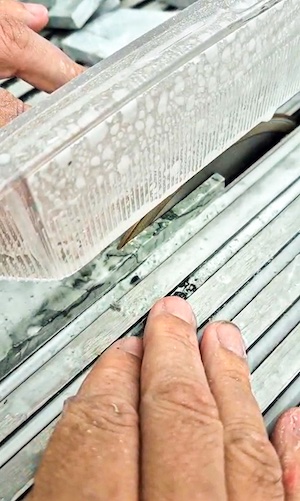
“Safety is something we all consider, even just for a split second when we turn on a tool,” Meyer said. “The diamond blade on a ring saw or your wet saw may only leave you with a slight burn if your fingers bump it, but a hand grinder may leave you with more of a bite! Lee [Callewaert] used to always say, ‘When using any tool, know where your left hand is.’ I still hear that in my head, whether I’m using a tool or just scratching out joints with a knife.”
Using guards on equipment is also key. “It doesn’t happen often but I’ve seen grinder stone cutting and metal cutting wheels break apart, and I’ve seen the damage it does to wet saw and ring saw blades,”
she said.
David Arnott, mosaicist extraordinaire from the UK and NTCA Affiliate Member, mostly uses nippers to create his tile masterpieces. But sometimes he needs to cut down material to nipper-sized chunks. He was working with quartzite and having a struggle getting clean cuts. But “using freezing cold water—and plenty of it—to cool the blade cuts clean. And using a QEP Black Widow® Diamond Blade gave a perfect cut,” he explained.
Ergonomics, PPE, and maintenance
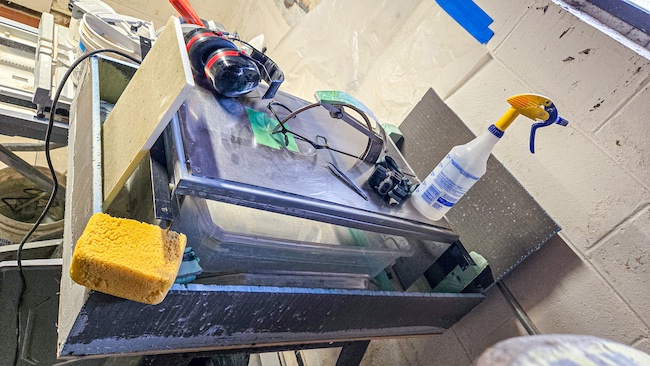
Chris Resti, Owner Operator of Crest Tile & Mosaic in Hilton, N.Y., differentiates his safety process when working on an art piece using a tool, versus a typical tile installation project. “The time spent on the tools is considerably longer,” Resti explained. “Because of this, it is important to set myself up for success. I try to keep the work station(s) at an ergonomic height and have my saws set up so there is minimal bending over or crouching. When you are standing in one spot for an hour or so, this makes a big difference. I make sure to step away in order to stretch and keep my muscles from cramping.”
Resti considers PPE such as safety glasses and hearing protection a must, calling them “cheap insurance” protect his eyes and ears. His hearing protection does double duty, safeguarding his hearing while giving him access to music and phone calls. This way, Resti said, he can “keep my hands and eyes on my tools.”

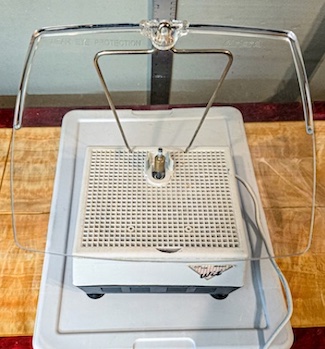
A wet saw is a key piece of equipment in traditional tile settings—and in crafting art pieces. “When I use the wet saw for extended periods, I use an apron to keep off the water and debris,” he said. “For the ring saw and shaper, I set up a ‘back stop’ to keep the water from getting on me. For the glass grinder/shaper, I purchased the Plexiglas® shield to keep debris out as well. And when cutting glass tile, I wear nitrile gloves that keep my hands clean but also provide the grip to hold the tile.”
Resti advises ring saw users to check all of the parts and keep them free of debris. “I do this at the beginning and end of every day, and periodically as needed,” he said. “Using a spray bottle of water makes easy work of clearing debris from the parts. I also like to keep the tray clean with a sponge. I always have tweezers handy in case a small shard gets down into the blade slot, as these can damage the belt and bearings inside. Knowing how the saw works, and how to maintain it, will help it last for a long time.”
A must for Resti is G-Tape™, which he adheres around the ring saw blade to prevent tiny pieces of tile from falling into the machine mechanism. “When a small piece falls in, it can wreak havoc on the parts inside the saw (belt, pulleys, bearings),” he said. “The tweezers help, but the tape is the best option for me.”
Shedding light on the matter
No matter what piece of equipment or tool you are using, having ample and appropriate lighting can reduce frustration—and danger—and provide ease and safety.
“Shadows can make cutting challenging,” Resti said. He’s planning to outfit his shop with more hanging LED lights to eliminate shadows. He uses a clip light or head lamp when necessary, which allows him to focus the light exactly where needed. There’s another bonus: “I have been using a head lamp in the field, and it’s been very helpful, as garages don’t typically have the best lighting.”
In the nip of time
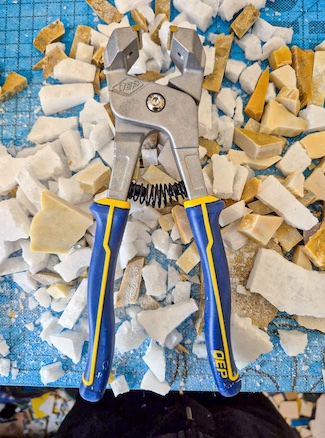
Since mosaic artist Arnott primarily uses nippers to craft his pieces, he has lots of experience with the ergonomics of nipper use. “I have seen many people using excessive force to break tiles using nippers,” he said. To address this, he collaborated with QEP to develop the QEP Artisan Tile Nippers by David Arnott, which launch this month. He designed this tool to be lightweight, with gel grips for extra comfort. The nippers have gauges for different types of tile so force isn’t needed: one for glass, one for ceramic and porcelain, and one for marble, stone and thicker porcelain. Each gauge setting gives “the right amount of pressure to get the perfect, clean cut,” he said. “This also limits the amount of flying-off cuts. They are also offset, giving you better vision on what you are actually cutting.”
A firm footing

Though not specific to artisan tile work, appropriate footwear is a key piece of PPE. Shoes need to be comfortable, since you’ll be on your feet for long hours. They also need to have puncture-resistant soles, and a measure of waterproofing and slip resistance.
In a recent conversation with Jan Hohn of Hohn & Hohn Tile in St. Paul, Minn., she emphasized the importance of shoes with a rigid safety toe that can protect against dropped materials. Appropriate, roomy, supportive shoes can also prevent neuropathy that results from pressure and compression.
Safety isn’t an optional aspect of plying your trade. Be sure to protect your body, hearing and vision, and keep your equipment in good repair. These measures will ensure longevity in your trade and smooth, frustration-free operation for your tools.



Lesley Goddin has been writing and journaling since her first diary at age 11. Her journey has taken her through a career in publishing and publicity, landing her the editor position of TileLetter and its special publications in 2006. Her goal is to educate, inspire, recognize and encourage those in the tile industry -- especially the tile and stone contractor.