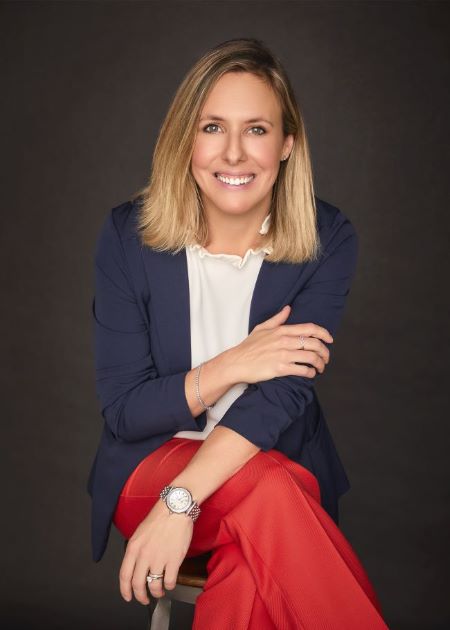
When Hilary Frank stepped into her new office on the third floor of Dal-Tile’s corporate headquarters in Dallas, she was returning home—not geographically, but professionally.
After nearly two decades with the company, her recent promotion to Vice President of Commercial Sales and Business Development represents a full-circle moment in a career that began in a design studio in Chicago. “I started in commercial, so now it’s like coming home,” Frank reflected during our conversation.
A career built on connection
Frank’s path into the tile industry wasn’t predetermined. Her mother is a florist with an eye for color and design; her father was a slab fabricator in Grand Rapids, Mich. When her family relocated to Chicago, her mother-in-law—who worked for a major builder standardized on Daltile—suggested she apply for a design consultant position. Her sister-in-law, already working for Daltile, encouraged her to take the leap.
That decision, made nearly 19 years ago, launched a career that would eventually span from the showroom floor to the executive suite.
The scope of responsibility
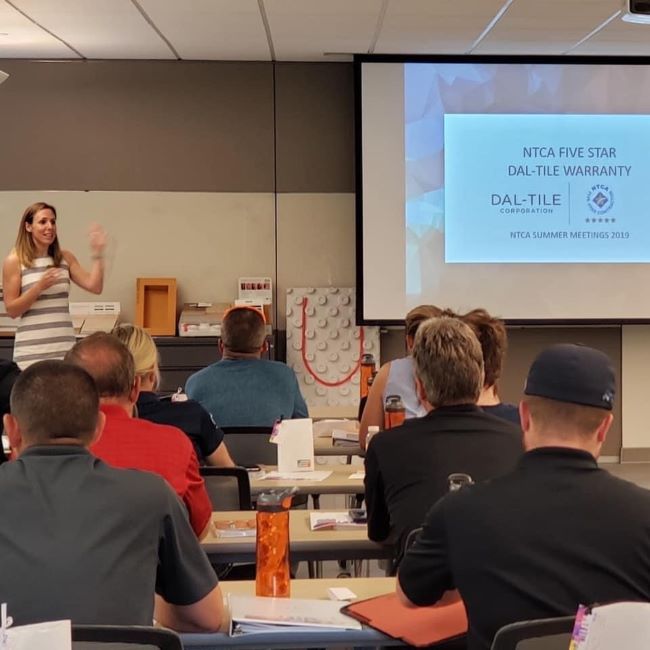
Today, Frank’s role encompasses three major areas. She leads commercial sales strategy across the Daltile, American Olean, and Marazzi brands, overseeing roughly 150 specification representatives nationwide who work with architects and designers. She manages the national-accounts segment, securing specifications for chain restaurants and retail locations. And she oversees the installation products business, managing vendor partnerships, assortment, pricing, and contracts.
Frank acknowledged that it’s a lot on her plate. “But it works because of how we go to market,” she explained. “My specification reps focus on the design phase—architects, designers, ownership developers. Meanwhile, our sales counterparts are the main point of contact for contractor partners. We work as a team in tandem, so we don’t have to shift focus, because we already have somebody focused on both sides of the equation.”
2025 performance and 2026 outlook
Despite economic headwinds, Daltile’s commercial division performed well in 2025.
“We did very well in commercial for 2025,” Frank said. “We saw a lot of projects come to fruition that had kind of been on hold or had a very expanded timeline from first projection.”
Looking ahead to 2026, Frank expressed cautious optimism. “We’re looking at 2026 with a lot of optimism. We still have a good pipeline, and I think we’ve done a nice job taking some marketshare within the segment.”
Market position and strategy
Dal-Tile’s strength lies in its position as the largest U.S. manufacturer—a message that resonates throughout the sales process.
“We’ve been able to tell that story through all different phases of the project,” Frank explained. “It’s been a successful talking point as we specified. But then even as projects have progressed, if there are changes or delays or problems with products that had been specified that weren’t our product, we’ve been able to help partners navigate to keep their projects on time and on budget.”
The company hasn’t shifted its strategy despite tariff pressures and market fragmentation. The two-pronged approach—specification reps working with designers and sales reps working with contractors—remains effective because it addresses both sides of the commercial equation.
National accounts: a team effort
When asked about national-account development, Frank emphasized that there’s no single starting point.
“Sometimes we work through a contractor, sometimes it’s with the national account directly, and sometimes it’s with an architectural firm,” she said. “It’s really because we have that broad national team that we’re able to touch all those touchpoints as needed to help secure the specification.”
The installation products connection
The addition of installation products management to Frank’s portfolio initially seemed disconnected from commercial sales. But Frank discovered unexpected synergies.
“When I first considered the role, this didn’t seem connected,” Frank admitted. “As I’ve done the role more, there’s such an importance of specifying the products on a commercial project. I’ve been able to make connections—because of wearing both hats—that we weren’t leveraging completely before.”
NTCA board service
Frank’s involvement with the National Tile Contractors Association extends beyond her corporate responsibilities. She serves on the NTCA board, a role she values for keeping her customer-centric.
“NTCA gives me the ability to connect with customers, hear them, and keep a more customer-centric approach to strategy,” Frank said. “I get to hear what a contractor’s thinking about a national account or what they feel like we should really be carrying in the stores, and feed that into how we move forward to make the best experience for our customers.”
The board position also strengthens relationships between Daltile and contractors nationwide. “I definitely have had several [contractors] that said, ‘Hey, I really need help with this,’ and I’ve been able to connect somebody with the right person,” Frank noted. “Person-to-person contact is so important. We do such better business that way.”
The corporate transition
Moving from Regional Vice President of Sales for the Midwest to a corporate role in Dallas has brought both challenges and rewards. The most difficult adjustment involved navigating corporate systems and processes—a learning curve Frank has since overcome.
“I’ve been with the company a long time, but never had a corporate position, so just learning how to navigate getting things done was an initial hiccup along the way,” Frank said. “But now I’m in a good groove.”
The move also meant relocating her family 900 miles and adjusting five children—including two sets of twins—to new schools. Yet the transition has been eased by Dal-Tile’s welcoming culture.
“It was like coming home,” Frank said. “A lot of things I used to do or think about are just right back, top of mind. We moved 900 miles with a family of seven, but people have been very welcoming and we have a great company culture.”
Leading women in tile
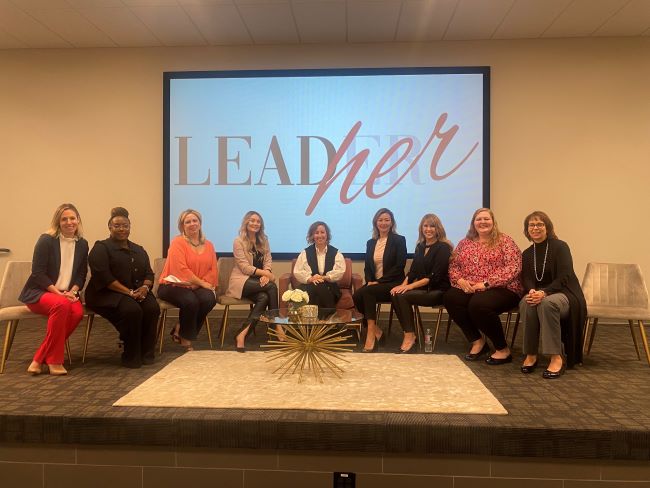
With the tile industry often perceived as male-dominated, Frank has taken a proactive approach to supporting women in her organization. A few years ago, she worked with Dal-Tile leadership to launch LEADher, an internal women’s networking and leadership community.
“LEADher is to help women within our organization learn different parts of the business, learn from each other, connect, network, and hopefully excel in their current roles,” Frank explained. “If they want to move into leadership, we find ways and paths to do that.”
The initiative is entering its fifth year in March, coinciding with International Women’s Day.
Frank credits her own success to managers who championed her potential and her willingness to ask questions.
“One of the things that helped me is I really always had managers who were real champions and saw that I had some potential. I was willing to raise my hand and ask to learn and do different things,” Frank reflected. “I wasn’t afraid to say, ‘Hey, I don’t really understand this. Can you explain it? Because I’m interested and here’s why.’”
Frank advises women entering the industry to have “the confidence to say, ‘I’m not sure, but I want to learn.’ Showing that curiosity can help you grow a lot as a person, both personally and professionally.”
Balancing family and leadership
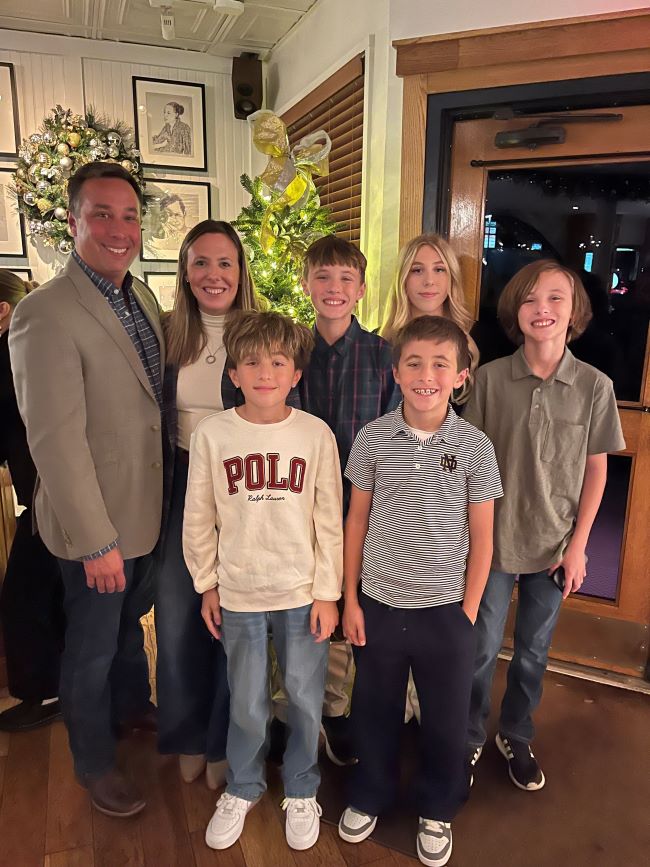
Managing a demanding corporate role while raising five children requires significant support and strategic planning. Frank emphasizes that asking for help isn’t a weakness; it’s a necessity.
“It’s having a supportive network or partnership or whatever that looks like for you,” Frank said. “It’s also being able to say, ‘I can’t do this myself.’ And that’s really hard for me. I like to think I’m a jack of all trades; I can get anything done I put my mind to. I have to remind myself to delegate. But I do feel like I have to accept that I can’t do everything. And so I have to have help.”
Her practical advice: “A really good calendaring system and a willingness to delegate are essential.”
The critical role of training
As products become more complex and formats grow larger, training has become essential to addressing labor shortages and ensuring quality installation.
“If you listen to any kind of industry forum, we talk a lot about labor shortage,” Frank said. “The only way to end a labor shortage is to get more people trained to do the work. And so the only way to do that is to offer training.”
The challenge is significant. “When I started with Daltile, 12”x12” was the norm, and now we’re talking 48”x48”,” she said. “Installing that large size is a pretty big difference. So we want to collaborate with partners and installers so [the tile] goes in and looks just as good on the finished floor as it does in the sample.”
Daltile supports training through its own programs, partnerships with NTCA, and collaboration with installation product vendors. “We’re working with our vendor partners to offer those types of training and product knowledge programs, both for our store associates and the customers who go to our stores,” said Frank.
Looking forward
As Frank settles into her corporate role, her focus remains on what has driven her throughout her 19-year tenure at Dal-Tile: understanding customer needs, building relationships, and positioning the company for success in an evolving market.
Her journey from design consultant to regional vice president to corporate leader reflects both personal determination and the opportunities available to those willing to ask questions, embrace change, and support others along the way.
“I love helping other people be successful,” Frank said, “and I feel like it’s helped a lot of people find ways to grow in their own careers.”
Commercial trends on the horizon
From Hilary Frank’s vantage point overseeing product strategy, she cites several key trends shaping the commercial market:
Large-format tiles: The shift toward oversized products is significant. “We’re getting asked more and more for 36”x36”, 48”x48”, really large-format products, which makes training all the more important because you’ve got to get those installed correctly,” Frank noted.

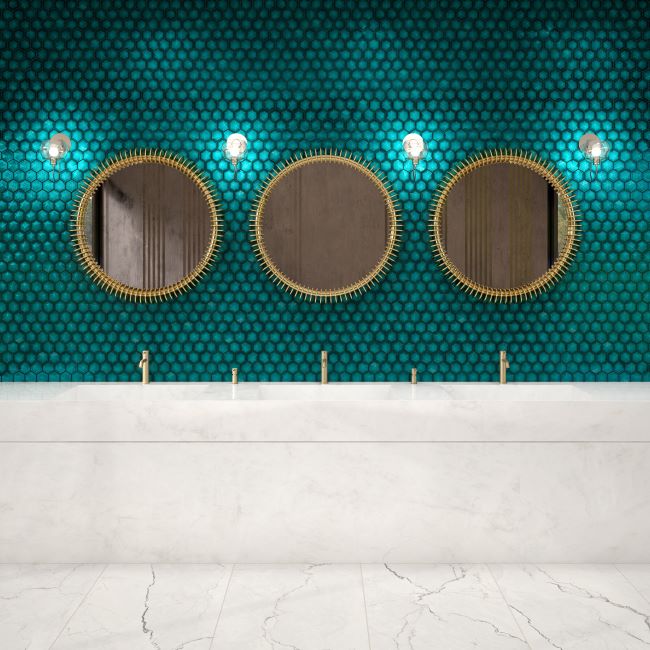
Artisanal and statement pieces: Designers are increasingly seeking unique, handmade characteristics. “We’re seeing a lot of artisanal looks: things that have a handmade or a unique characteristic to them, statement type of pieces,” Frank said.
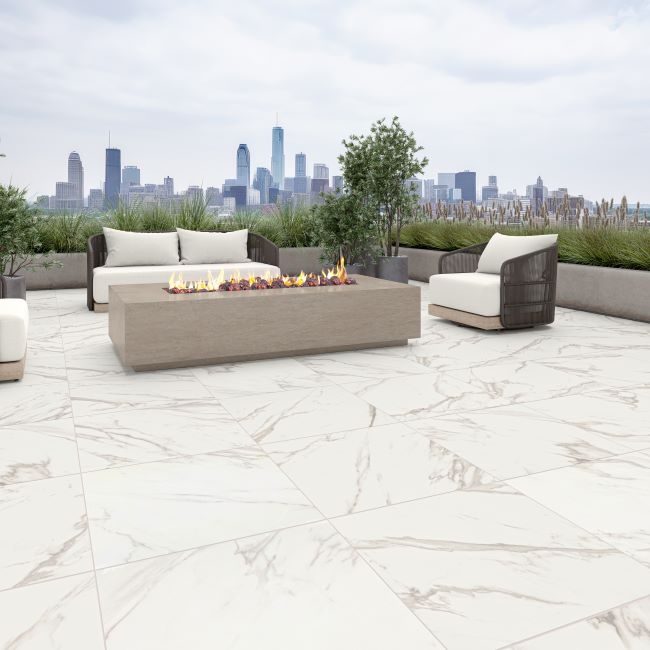
Hyper-realistic stone looks: Porcelain tiles that mimic natural stone continue to gain traction, particularly for exterior applications. “We’re seeing a big shift to adding porcelain into exterior environments,” she said. “It gives you that natural stone look, for example, without some of the pitfalls you might find with actual natural stone in the exterior environment.”

Bart Bettiga is the Executive Director of the National Tile Contractors Association. Bettiga is a member of the Board of Governors of Coverings, one the largest tradeshows in North America. He has over 30 years of experience in the tile and stone industry and has served as the NTCA Executive Director since 2002. He is a well known speaker and author on ceramic tile and natural stone distribution and installation. He oversees the financial operations of the NTCA, TileLetter and the Ceramic Tile Education Foundation.