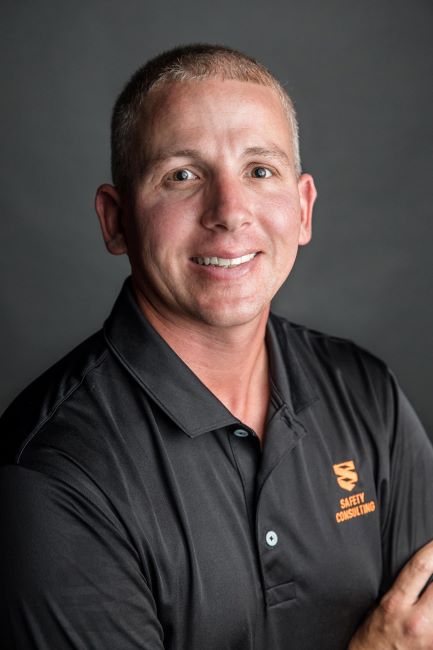
Brad Yeubanks is an employee of World Insurance, which serves more than 30 states and is headquartered in New Jersey. He has been with World Insurance for five and a half years and works out of its Topeka, Kan., office. World Insurance specializes in business insurance, employee benefits, payroll and human resources solutions, and much more. It works closely with many general and specialty contractors in construction, and emphasizes safety consulting. Our conversation covers the important elements of a successful safety program and how it impacts the tile trade.
Can you tell our readers about World Insurance and what makes your company unique?
World Insurance is a one-stop shop for contractors. Our company, Safety Consulting, has been in business for about 50 years and was acquired by World Insurance roughly four years ago. What sets us apart is our integration of safety consulting with comprehensive insurance solutions, including workers’ compensation, benefits, payroll services, and HR support.
We started as a regional company serving Kansas, Missouri, and Oklahoma, but now we can support contractors across the entire United States. We have consultants in the Northeast, connections in the Southeast, and we can work remotely or travel to clients. This flexibility is crucial because safety doesn’t stop at state lines.
How do you deliver safety training and consulting, especially for companies with remote or dispersed crews?
During COVID-19, we realized getting people together in one location can be tough, so we developed the Risk Management Center—an online learning platform. Through this platform, we can deliver hundreds of trainings, track safety data sheets, provide certificates of insurance, and monitor compliance data. It’s accessible from anywhere, which is perfect for remote crews or companies with multiple jobsites.
We also do in-person training because there’s real value in face-to-face interaction, and we have clients across the country participating in remote safety meetings. For example, we work with a company in New Jersey where we conduct two 30-minute safety training sessions per week for their drivers, and we can even translate materials for non-English-speaking workers.
When a contractor first reaches out to World Insurance, what’s the process?
The first step is always an assessment. I’ll ask questions like: How many employees do you have? How many jobsites? What are your biggest risks? What keeps you up at night? These questions help me understand what the company needs and which issues are most pressing.
From there, we look at their current safety programs. Do they have formal safety programs in place? Are they conducting monthly or quarterly trainings, or no trainings at all? Then we assess their OSHA compliance status and put together a proposal tailored to their specific needs and goals.
How important are safety meetings, and how often should contractors hold them?
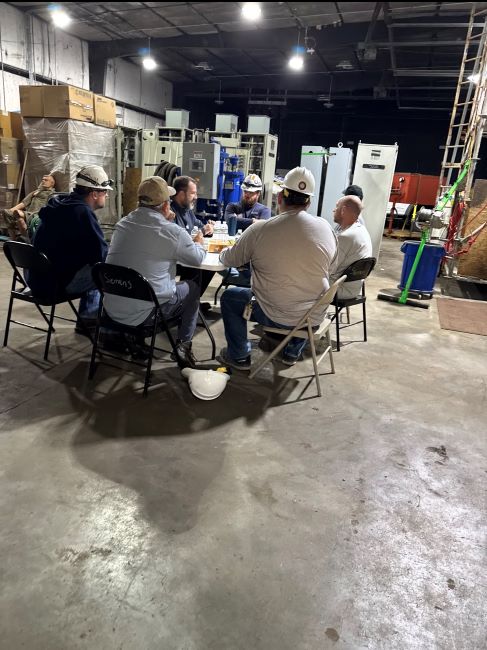
Safety meetings are critical! They keep hazards visible, reinforce safety policies, and—this is huge—they create documentation. Documentation is key because if an injury occurs, we can prove that employees received training on that specific hazard. That can make a real difference in managing claims.
Most of our clients hold monthly safety meetings, which seems to be the sweet spot. A typical meeting lasts 30-45 minutes. At a minimum, I suggest people meet at least quarterly.
Companies should also conduct daily toolbox talks—five-to 10-minute discussions where crews address that day’s specific hazards. If you’re working from scaffolding that day, you talk about scaffold safety. If you’re using ladders, you discuss ladder safety. It keeps safety top of mind.
Do you train entire crews, or do you focus on supervisors and foremen?
We prefer to train the full staff whenever possible. Some companies ask us to train just supervisors and foremen, thinking they’ll cascade the information down to workers. But the message can get confused. We’ve found that being in front of the workers themselves is most effective.
That said, we’re flexible. We can train at a jobsite, at a company’s office, or remotely. If a company has a lot of employees, we can conduct multiple sessions.
Beyond training, what other services do you provide?
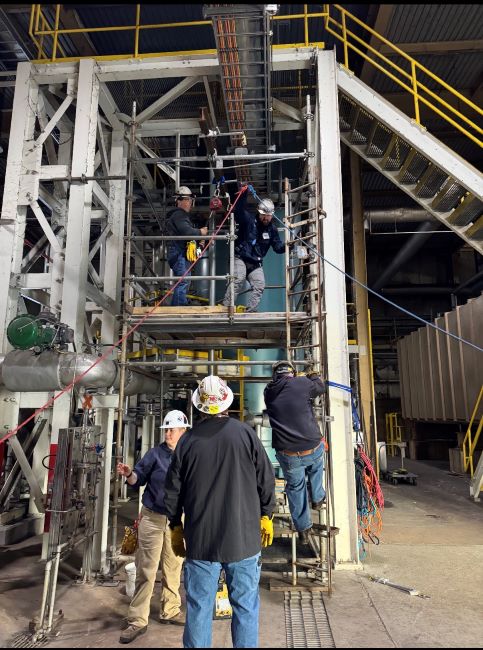
We conduct safety site inspections, both announced and surprise visits. You get the true test when you show up unannounced, because you see what’s happening, not what people think you want to see.
During inspections, we’re looking for two things: compliance issues and unsafe actions or conditions. We also look at hazards created by other trades on-site. For example, if tile workers are in an area where other contractors are grinding, we check whether they’re wearing proper hearing protection. If there are fall hazards above them, we point those out. We want to identify problems before OSHA does.
Can you talk about the correlation between effective safety programs and workers’ compensation costs?
When a contractor implements and consistently enforces an effective safety program, the reasonable expectation is fewer injuries, fewer lost-time claims, lower claim costs, and eventually a lower premium. The strongest results occur when safety efforts are paired with prompt incident reporting, active claims management, and a formal return-to-work program.
Many contractors now face bid restrictions if their incident and injury scores are too high. Safety isn’t just about protecting workers—it’s about business viability. Companies that can’t bid on jobs because of poor safety records lose revenue.
What are the most common OSHA violations and hazards you see in construction, particularly in the tile industry?
OSHA’s top violations are falling protection and hazard communication. In the tile industry specifically, we see issues with ladder and scaffold use, PPE violations, improper tool use, and housekeeping problems.
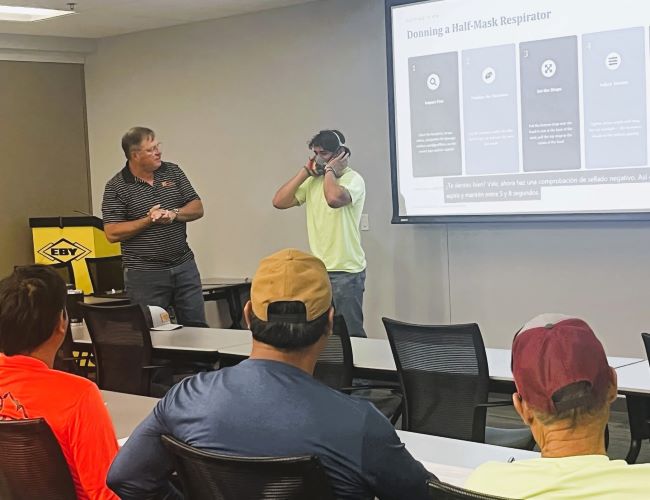
Silica exposure is probably the most significant tile-specific hazard. When workers cut or fabricate stone, they’re exposed to crystalline silica, which can cause serious lung disease. We address this through training, air monitoring, wet-cutting techniques, proper ventilation, and respirator fit testing.
Other concerns include ergonomic issues from repetitive bending and lifting, slip-and-fall hazards from wet floors, and inadequate documentation. “Documentation or disaster”—that’s what I tell people. If you’re doing safety training or anything safety-related, document it. Keep sign-in sheets, track topics, and maintain records.
How does hiring World Insurance compare to hiring an in-house safety manager?
Hiring a full-time safety manager is expensive. We bring expertise, structure, and accountability at a fraction of that cost. One serious workers’ compensation claim, one OSHA citation, or one lost-time injury avoided will pay for a year of our consulting.
We offer flexible monthly retainers tailored to each client’s needs. Some companies want two site inspections per month; others want access to our training platform and program reviews. There are no long-term contracts, so companies can adjust their scope as needs change or test our partnership with a six-month trial.
Is mental health and wellness part of your safety programs?
Absolutely! Construction has one of the highest suicide rates of any industry. We promote awareness and provide resources, including information about the 988 Suicide and Crisis Lifeline. We also encourage companies to develop health and wellness programs because it shows employees that leadership cares about their well-being, which supports retention and creates a stronger safety culture.
For more information about World Insurance, reach out to Brad Yeubanks at 785-234-1005 or bradyeubanks@ worldinsurance.com.

Bart Bettiga is the Executive Director of the National Tile Contractors Association. Bettiga is a member of the Board of Governors of Coverings, one the largest tradeshows in North America. He has over 30 years of experience in the tile and stone industry and has served as the NTCA Executive Director since 2002. He is a well known speaker and author on ceramic tile and natural stone distribution and installation. He oversees the financial operations of the NTCA, TileLetter and the Ceramic Tile Education Foundation.