
Ceramic tile has graced the walls and floors of buildings for thousands of years, from ancient Persian palaces to contemporary American homes. Yet despite this rich legacy, the history of America’s tile industry—and the craftspeople who shaped it—risks fading into obscurity. That’s where the Tile Heritage Foundation comes in, and under the leadership of newly-appointed Executive Director of Development Karim Motawi, the organization is embarking on an ambitious mission to preserve, protect, and promote this vital heritage.
NTCA supports the mission and goals that Tile Heritage Foundation (THF) has established. Lesley Goddin, Editorial Director and Senior Writer of TileLetter, and I are both on the THF Board of Directors and have committed our time and energy to help strengthen the Foundation’s messaging and strategy. We look forward to sharing more of this information as it develops.
This article captures Motawi’s vision for where he hopes to lead the Foundation now and in the future.
A foundation built on passion
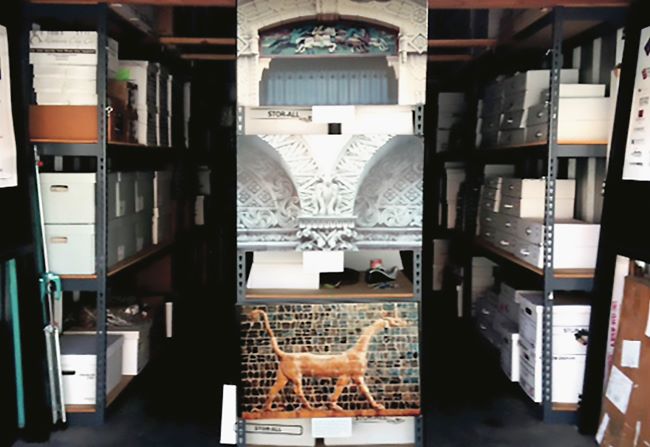
The Tile Heritage Foundation was established in 1987 by Joe Taylor and Sheila Menzies, visionaries who recognized the importance of documenting and preserving the history of American tile manufacturing. For nearly four decades, they have painstakingly assembled an extensive archive of decorative ceramic tiles, company catalogs, and documents from defunct tile companies—a treasure trove of industry knowledge that might otherwise have been lost to time.
“Our mission is threefold,” Motawi explained. “We preserve the history of the tile industry, we protect significant tile installations, and we promote tile making, installing, and all facets of the American tile industry.” This comprehensive approach reflects a deep understanding that tile heritage is not merely about looking backward, but about using the past to energize the present and future.
Motawi’s appointment as Executive Director of Development—with plans to assume the full executive director role next year—marks a pivotal moment for the Foundation. A tile artist and entrepreneur himself, Motawi founded Motawi Tile Works with his sister in the early 1990s and spent 18 years building the business before moving on to other ventures in the tile industry.

His personal connection to the Foundation runs deep. Taylor and Menzies helped him secure his first showroom customer when he was just starting, and he participated in their tile symposiums, which fostered a vibrant community of small tile makers. “It was an easy decision for me,” Motawi said of joining the Foundation. “It’s been such an important part of my early career that I had to join and continue the mission and help position it for the next 40 years.”
A new home, a digital future
One of Motawi’s first major initiatives has been relocating the Foundation’s archives from California to the headquarters of the Tile Council of North America (TCNA) near Clemson University in South Carolina. This move was essential to ensure the long-term preservation and accessibility of the collection, which includes invaluable historical documents and tile samples.
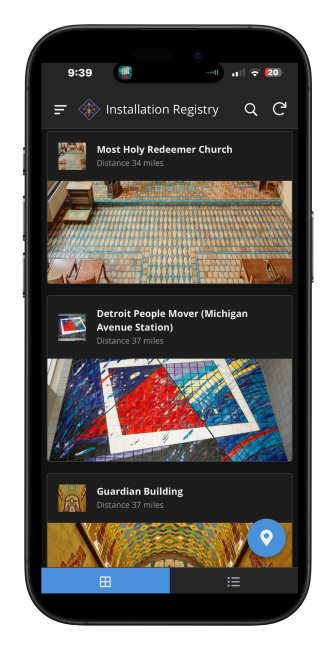
But preservation is only half the battle. The real innovation lies in digitization. Motawi is spearheading the creation of the National Tile Installation Registry, a groundbreaking web and mobile application that will bring tile history into the digital age.
The National Tile Installation Registry: connecting past and present
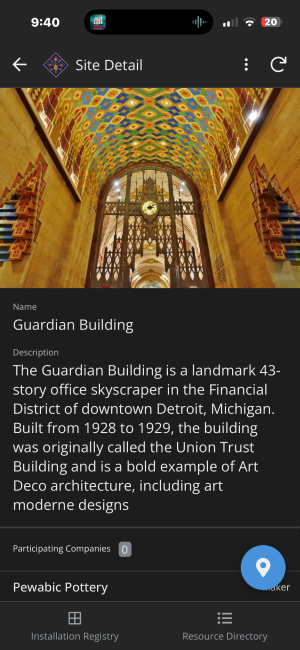
The Registry is intended as far more than a simple database. It will be a location-aware tool that allows users to discover significant ceramic tile installations—both historic and contemporary—in their area. Currently in development, it will be accessible under the Programs tab on tileheritage.org, and a mobile app also is in the works. Once it’s live, you’ll see nearby tile sites with detailed information about the companies, architects, designers, and installers involved in each project.
“It’s meant to really connect people,” Motawi said. “You see what’s possible, and that’s what’s exciting for me— sharing these wonderful historic sites so a client can say, ‘That’s beautiful. I want that or something like that.’”
This inspiration-to-action pipeline is central to the registry’s value proposition. When a homeowner, designer, or architect sees a stunning tile installation, they’ll be able to immediately identify the professionals responsible and connect with them. For installers and tile companies, the Registry will be a powerful marketing tool—a permanent record of their best work in a prestigious, industry-sanctioned platform.
The Registry will also serve as a directory of active tile makers, installers, architects, and retailers. It will be location-aware, so a designer in Miami won’t be overwhelmed with options from Seattle. Instead, they’ll discover local talent capable of executing similar projects.
National Tile Installation Registry Provisional Criteria
Currently in development, the National Tile Installation Registry sites are locations featuring architectural tile or mosaics that embody artistic, cultural, or industrial significance. The site may be historic or contemporary, and international sites are eligible for inclusion. Permanent museum collections and displays of historic tile may also be included in the Registry.
Here’s a look at what will be considered for inclusion in the Registry. To be eligible, a site must meet one or more of the following criteria, as determined by the National Tile Installation Registry Selection Committee. The committee will be composed of Tile Heritage Foundation staff, board members, and members of the ceramic tile and mosaic communities. Tile Heritage Foundation members at the $250 level will be eligible to submit projects for consideration in the Registry.
Provisional Criteria
• Represents a masterful architectural installation of ceramic tile or mosaic art
• Demonstrates superior installation craftsmanship and design
• Is an exceptional example of a cultural tilemaking tradition or mosaic technique
• Illustrates a dramatic or important advancement in artistic or industrial tile making or use
• Is a significant permanent museum tile collection
Stay tuned to tileheritage.org for more information about the Registry as it becomes available.
Building industry support
Of course, none of this is possible without funding. Motawi is candid about the challenge; the Foundation cannot rely solely on the handful of large U.S. tile manufacturers or small art-tile makers. Instead, it needs support from across the entire industry—contractors, distributors, retailers, and enthusiasts. But why should these businesses invest? The answer lies in demonstrating tangible value. Motawi shared a powerful example: a tile installer who was stationed overseas as a Marine saw a stunning tile installation in an Italian cathedral and was so inspired that he eventually made it his career. Fifteen years later, he’s still installing tile.
“This proves to me that our goal of sharing this historic tile work can inspire people not only to use it, but also to join our trade,” Motawi said.
Beyond the National Tile Installation Registry: a broader vision
While the Registry is the Foundation’s flagship initiative, Motawi’s vision extends far beyond a digital database. He’s planning traveling exhibitions that would showcase the Foundation’s tile collections in airports, hospitals, and museums. He’s developing a tile identification tool to help people identify and source historic tiles. And he’s reviving the tradition of tile symposiums—regional gatherings where installers, makers, architects, and designers come together to tour historic and contemporary sites, share knowledge, and build community.
The Foundation also plans to collaborate with the Ceramic Tile Education Foundation to strengthen training, certification, and industry awareness. This synergy could create specialized installation teams capable of handling artistic tile projects—work that commands premium prices and attracts passionate craftspeople.
A prime example of this model in action is TileFest in Doylestown, Pa. What began as a Tile Heritage Foundation Symposium 25 years ago has evolved into a thriving annual event that draws tile professionals and enthusiasts from across the region.

Looking forward
As Motawi takes the helm of the Tile Heritage Foundation, he carries with him both the legacy of Joe Taylor and Sheila Menzies and a clear-eyed vision for the future. His goal is to prove that supporting the Foundation isn’t merely a charitable act—it’s an investment in the industry’s vitality.
“This is our industry and we need to support it,” Motawi said. “Not just the historic part, but we need to support it today. Our goal is really the three pillars: preserve the history, protect the tile sites themselves, and promote the makers, installers and designers who are making it happen today.”
With the National Tile Installation Registry as its centerpiece, the Tile Heritage Foundation is poised to transform how the industry understands, celebrates, and builds upon its rich past. In doing so, it’s not just preserving history—it’s actively shaping the future of American tile.

Bart Bettiga is the Executive Director of the National Tile Contractors Association. Bettiga is a member of the Board of Governors of Coverings, one the largest tradeshows in North America. He has over 30 years of experience in the tile and stone industry and has served as the NTCA Executive Director since 2002. He is a well known speaker and author on ceramic tile and natural stone distribution and installation. He oversees the financial operations of the NTCA, TileLetter and the Ceramic Tile Education Foundation.