Artisan tilesetting encompasses a range of technologies, from the basic pencil-and-paper sketch to software and devices that accelerate and facilitate the process.
In this story, several artisan tilesetters share their workflow, and how high- and low-tech processes support their goals.
Bridging the gap between digital perfection and real-world craftsmanship
Lucas Hendrickson of Northwest Artisan Tile Company in Auburn, Wash., relies on technology, especially in the early stages of creating mosaics, logos, and custom pieces. He partners with collaborators who are experienced in creating templates using Adobe Illustrator or Procreate (iPad) software. Chris Resti, owner of Crest Tile and Mosaics in Hilton, N.Y., and a fellow Artisans Revolution in Tile (A.R.T.) mosaic program alumnus, is one of his best partners.
Hendrickson said, “Most logos and illustrations aren’t designed with mosaic-cutting in mind. They often need to be subtly rethought so they translate into physical material—accounting for tile size, blade radius, curve limitations, and sometimes adding relief or cut lines that wouldn’t exist in the original artwork, but are necessary to make pieces float and lock together properly. The technology helps bridge that gap between digital perfection and real-world craftsmanship.”
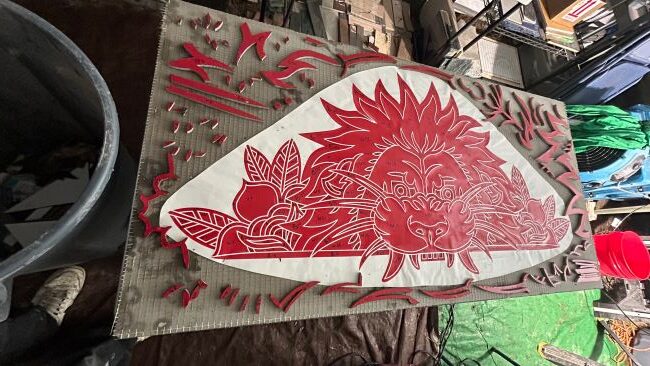
Hendrickson said that some of the best mosaics in the world are created using just a projector to sketch and size the design. But he prefers the vinyl templating method that he learned about at A.R.T. Hendrickson uses a large-format USCutter vinyl plotter due to its flexibility with larger widths. “These machines are commonly used for sign-making, stickers, or apparel graphics, but they translate really well into mosaic templating,” he said. User-friendly Sure Cuts A Lot Pro software allows him to drag in the file, trace it, size it, and send it to the plotter.
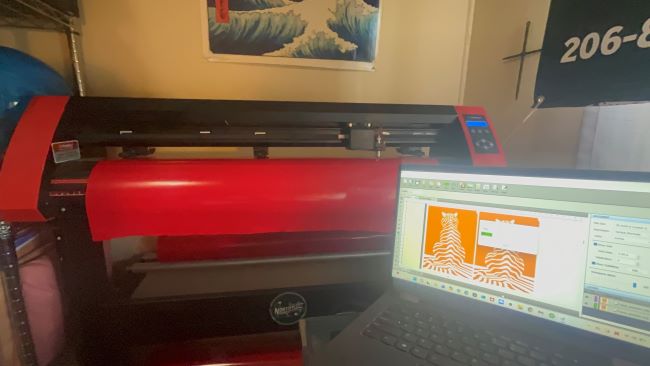
“Before cutting, I often swap the blade for a pen and do a dry run on the back of the vinyl to make sure everything tracks correctly and nothing runs off the edge,” he said. “Once I’m happy, I cut the vinyl and make extras, which I keep in a manila envelope so replacement templates are always on hand during installation.”
Hendrickson said he also uses AI to “work through ideas with clients or develop personal artwork when I’m trying to translate what’s in my head into something visible. I’ll often generate multiple versions, crop or edit them, combine elements using apps like Adobe Express or Creative Cloud, and sometimes even feed edited images back into AI to refine them further. It’s especially helpful when I hit a wall or keep getting repetitive results. Sometimes AI even helps me refine the prompt itself.”
For Hendrickson, technology supports the craft. “It allows more precision up front so that the hands-on work can stay intentional, efficient, and expressive once the cutting and setting begins.”
Learning the tech tools
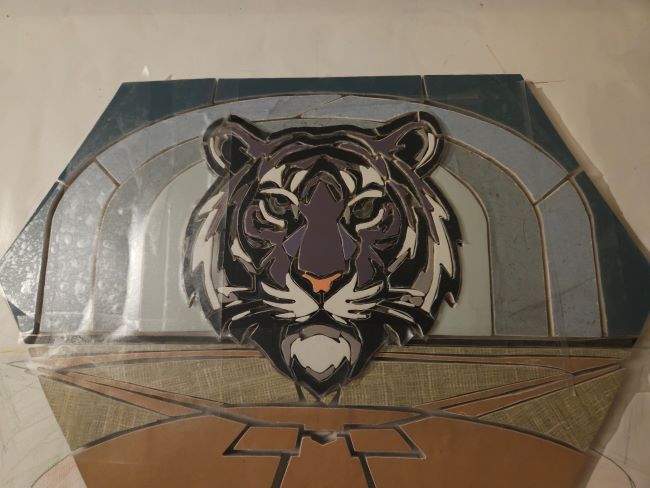
Sarah Thelen, owner of S. Thelen Construction, LLC, specializes in the artistic side of remodeling, including woodwork and kitchen, bath and tile work, in Omaha, Neb. An A.R.T. alumna, she recently created her first custom mosaic piece for Louisiana State University.
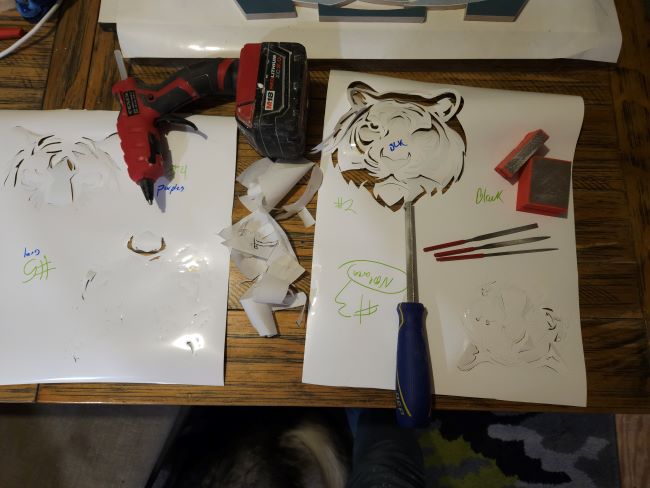
Admitting she is not tech-savvy and leaning heavily on her brother Rory’s AV engineering expertise for technology questions, she used the paper-and-pencil method to develop mosaic designs initially. But Rory adapted her mom’s Cricut machine to print her vinyl templates.
“It took about two hours for him to figure out; then he taught me in five minutes!” she said. “We ended up taking a photo of each area of the drawn-up mosaic, uploading it to Cricut’s program, and creating the lines/pieces. The Cricut vinyls work the best for sticking to the tiles. We tried to break the tiny details out by color so it didn’t get so confusing. The tiger I am working on now took five different cut pages to get the pieces correct.”
Thelen normally uses Autodesk AutoCAD for layout production and design and Bluebeam for blueprints. “I use maybe 10 percent of what [AutoCAD] can handle,” she said. A friend mentioned to her that AutoCAD has a sketch feature, which Thelen explored for an hour.
Eureka! “I had the design program I was looking for all along,” she exclaimed. “I laughed at my own ignorance with technology. It would have saved so much time!”
Now she just uploads the photos she wants as her design, sketches over them with the AutoCAD program, saves everything by section, and prints them off with the Cricut machine.
Procreate and Cricut speed the process
Another Cricut aficionado is Snowbee Custom Tile in Canton, Ohio. Co-owner Rochelle Snowberger said she and her husband Aryk use the iPad, Apple Pencil and Cricut to make the templates for their mosaics. Their favorite software is Procreate. “I have learned so much already, and I learn something new with each template we make!” she said.
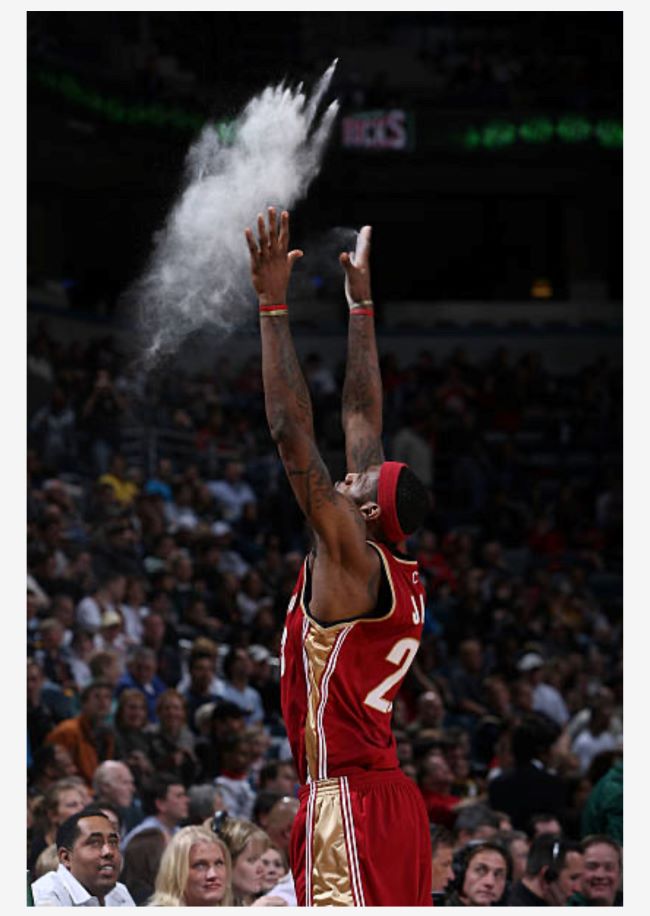
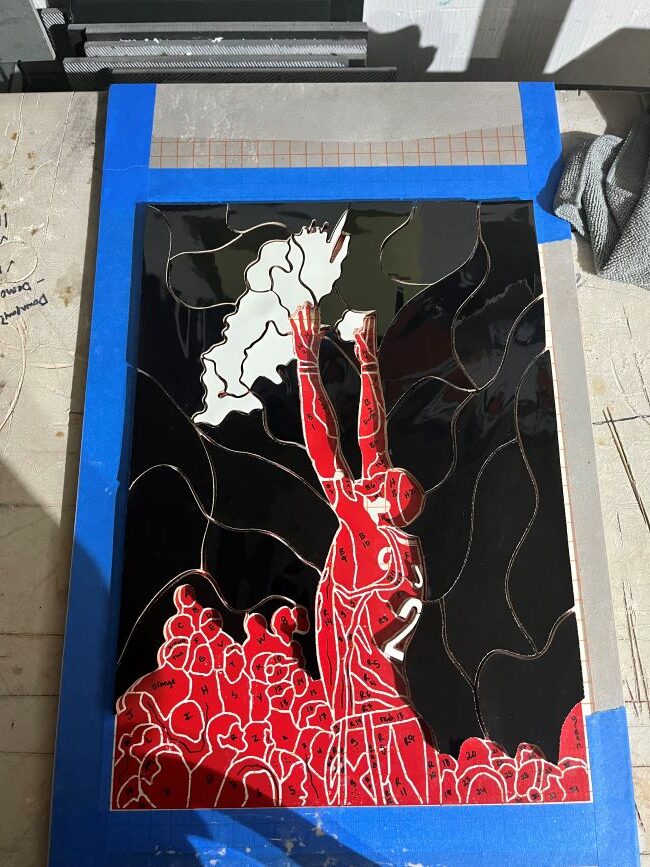
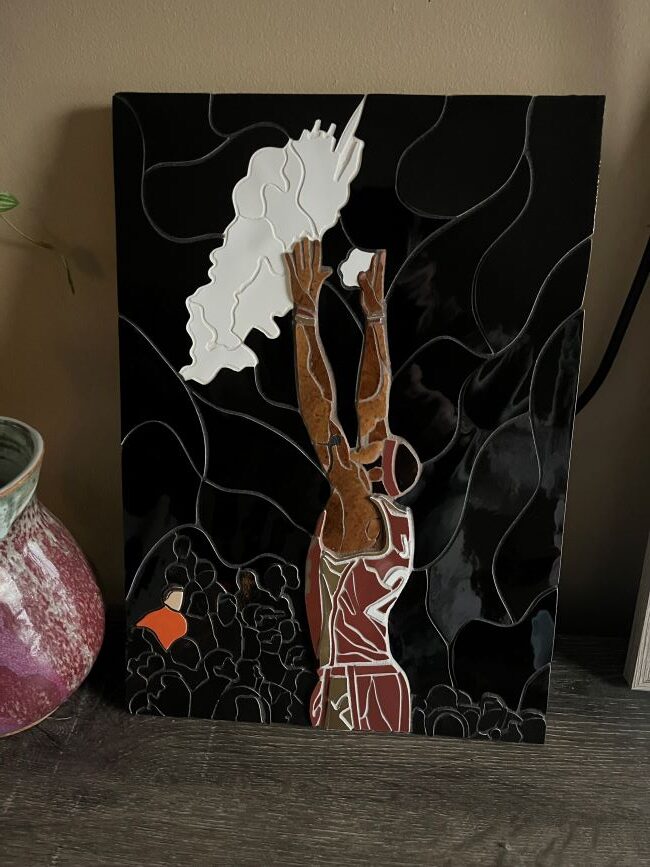
Rochelle used Procreate and Apple Pencil to trace the outline of LeBron James in their latest mosaic, “The Man in the Arena.” They then added lines or joints to highlight wrinkles, shadows and other details. Once they were satisfied with the drawing, they uploaded it into the Cricut, adjusted the size, and made sure both the cuts and the piece sizes worked.
Once cut, the Snowbergers label the sticky vinyl pieces before placing them onto the tile. That gives them more time to “hand cut, shape and polish them into precisely the right shape,” she said.
Though the Snowbee team has created mosaics without it, the technology “speeds up the design process that most of us artists aren’t even able to charge for,” she explained. “Time is money!”
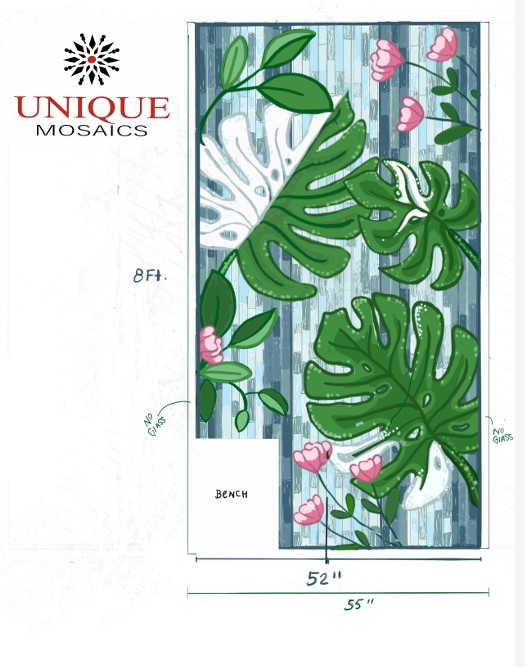
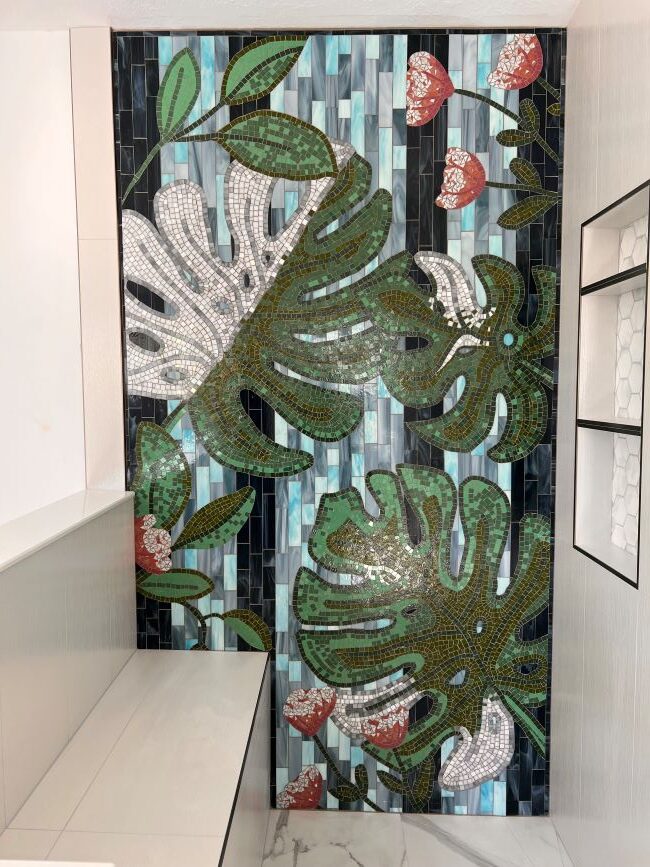
Another Procreate user is Angie Ré, owner of Unique Mosaics in South Salt Lake, Utah. “I like to use Procreate on my iPad to work up the idea for my clients, then I print out the drawing’s actual size and use it as a template for reference while I build the mosaic,” she said.
Summing up
“None of this technology really feels new at its core,” Hendrickson concluded. “Almost every process I use can be traced back to something very primitive—tracing, transferring, scaling, repeating, and planning before cutting. Whether it was charcoal on stone, paper cartoons, pouncing, or full-scale floor drawings, artisans have always looked for ways to move an idea from the mind to the material accurately.
“The tools have evolved, but the intent hasn’t,” he added. “Software replaces paper, vinyl replaces
dusted lines, and digital images replace sketches, yet the underlying logic remains the same. To me, modern technology isn’t a departure from traditional craft, it’s simply the latest refinement of the same problem-solving instincts artisans have relied on for centuries.”

Lesley Goddin has been writing and journaling since her first diary at age 11. Her journey has taken her through a career in publishing and publicity, landing her the editor position of TileLetter and its special publications in 2006. Her goal is to educate, inspire, recognize and encourage those in the tile industry -- especially the tile and stone contractor.