
Last month, a tile contractor I was talking with in the Midwest told me he’d spent about $18,000 on Google Ads over the previous two quarters, but he lost roughly a third of those leads because his estimator couldn’t get back to homeowners inside 48 hours. His crews were booked, his phone was ringing, and he was still bleeding money.
That gap between demand generated and demand converted is the quiet killer in this trade, and it shows up in the data. One tile marketing analysis found that without prompt follow-up, 50% to 60% of warm leads go cold, turning marketing spend into a sunk cost.
I’ve spent a decade building software for service contractors, and the pattern I see in tile is consistent with what I see in HVAC, electrical, and landscape: the shops that grow profitably fix operations first, then pour fuel on marketing. Not the other way around.
The math nobody wants to run
Wexford Insurance’s 2024 guidance for tile contractors puts it plainly: installers who concentrate on accurate estimating and efficient scheduling tend to earn healthier profits over time than those who compete on price or lead volume. The reason is arithmetic. If your crew utilization is 60% and your close rate on estimates is 25%, doubling your ad spend only doubles the number of estimates you can achieve. It doesn’t touch the two variables that actually determine take-home: how many billable hours your crews put on the wall, and how many of your bids turn into signed contracts.
A profit-focused tile business guide recommends treating profit margin as a line item, targeting 20% to 30% net per project. You cannot hit that with a schedule that has holes in it, and you certainly cannot hit it if your estimator is chasing hot leads three days after the site visit.
Speed to estimate is a profitability lever
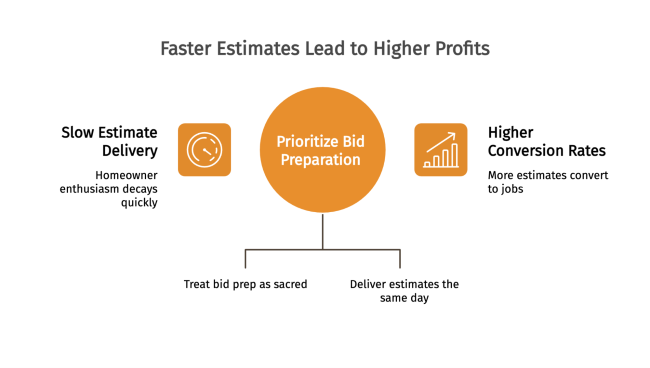
Here’s where I want to point to first-party evidence. We’ve observed across the contractors using our platform that residential service operators convert estimates to signed jobs at meaningfully higher rates when the estimate reaches the customer the same day as the site visit, versus 24 to 48 hours later. The vertical I have the cleanest data on is electrical residential service, but the behavioral pattern (homeowner enthusiasm decays fast) applies just as forcefully to a bathroom tile remodel or a backsplash job.
If you want to compete for the higher-margin residential remodel work, the estimator’s turnaround time is a schedule problem, not a sales problem. Blocking two hours a day for bid preparation, and treating that block as sacred, will move your close rate more than another SEO retainer will.
The dispatch board is your P&L
Tile jobs are inherently multi-visit: substrate prep, install, grout, seal, punch. A 2025 scheduling guide recommends adding 15% to 20% contingency time to each phase and building standardized templates by job type (residential bath, commercial kitchen, exterior patio, etc.). The PocketBoss’s field scheduling formula (job time × 1.3, plus drive time, plus a 30-minute buffer) is a decent starting point, and their data suggests geographic clustering of jobs can save two or more hours of drive time per day.
A few years ago, Jeff Occhipinti of Columbia River Tile & Stone and Dirk Sullivan of Hawthorne Tile, both NTCA Five-Star Accredited Contractors in Portland, Ore., were quoted in TileLetter revealing that unforeseen scheduling delays were a top source of stress. Sullivan described jobs pushed by three or four weeks as leaving “holes” nobody can fill on short notice. That hole is pure margin evaporation. A dispatch board with a live standby list and a foreman empowered to shuffle crews without waiting for the owner’s call is what closes the hole.
Job costing turns hunches into decisions
You cannot manage what you do not measure, and tile crews rarely measure labor at the resolution that matters. From contractors I work with directly in landscape design-build, project profitability swings hardest on labor-capture accuracy: crews that clock in and out by job code rather than by day consistently surface margin issues earlier in the season. Tile crews face the same physics. If a bathroom job books 32 labor hours and you find out in April that it actually took 47, you have three more months to fix the estimating template before summer eats you alive.
Deelo’s 2026 operations guide for tile installers recommends bidding to a 30% to 40% gross margin with explicit waste factors and complexity multipliers. That target is unreachable without job-level labor and material tracking. It is reachable, boringly and repeatedly, with it.
When marketing finally earns its keep
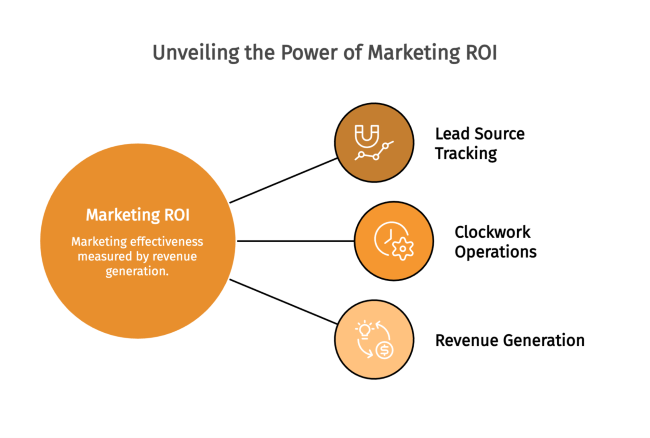
Once your close rate is climbing and your crews are running clockwork weeks, marketing dollars start to compound. From contractors I work with directly, the operators who get the most out of lead management aren’t necessarily those with the most leads. They’re the ones who consistently log lead sources, so within a season they actually know which marketing channel is funding their growth. Without that, you’re guessing which half of your ad budget works—and the guess is usually wrong.
JobCloser’s 2025 seasonal guidance recommends running installation schedules “like clockwork” during peak months. Clockwork operations are what let a marketing campaign convert into revenue instead of chaos.
The operator takeaway
Look at your last 12 completed jobs before you look at your next 12 marketing dollars. If your average estimate turnaround was longer than a business day, or if you cannot tell me the gross margin on any three of those jobs without opening a spreadsheet, marketing is the wrong problem to solve this quarter. Fix the plumbing before you turn up the water.

Joy Gomez
Joy Gomez is an engineer, process automation expert, and the Founder of Field Promax. Known for his technical expertise and commitment to field service innovation, Gomez writes about transforming traditional business models into paperless, efficient operations. He is a Lean Six Sigma Black Belt based in Rochester, Minn., dedicated to helping field professionals work smarter through better technology. Connect with him on LinkedIn.