


For years, concepts such as sustainability, wellbeing, flexibility, and digitalization have shaped the conversation around spatial design. However, the sector is now entering a new phase. It is no longer enough simply to incorporate these concepts into the narrative. Architects, interior designers, developers, hotel operators, and brands are increasingly challenged to demonstrate, through measurable data, the real impact of their decisions on both people and the environment.
The sixth edition of The New Habitat 27/28, APE Grupo’s annual trends report, identifies this shift in mindset. Based on international research and a survey of 352 professionals working in design, architecture, and spatial creation, the study explores how residential, hospitality, workplace, and retail environments are evolving in a context shaped by the rise of artificial intelligence (AI), the need to advance toward more sustainable models, and profound social changes affecting the way we live, work, travel, and consume.
One of the report’s most significant conclusions is the differing pace at which the sector is embracing technological innovation and environmental assessment mechanisms. While seven in ten professionals use AI tools in their work and one in three uses them almost daily, only one in six projects currently measures its environmental footprint through verifiable systems. This highlights an increasingly evident reality: technology is being rapidly integrated into creative and management processes, while the objective measurement of sustainability continues to face barriers linked to budget constraints, technical complexity and market demand.
The New Habitat has been developed in collaboration with trend consultancy Futurea and with the support of, among other organizations, the international network Women in Office Design (WOD). For José Miguel Pellicer, CEO of APE Grupo, this sixth edition confirms the maturity of a project that the worlds of architecture and design have embraced as their own.
“The sector has become very good at talking about itself; now it needs to prove that it can do what it says it does,” Pellicer said. “That transition from narrative to practice is the real challenge of this new phase.”
Homes: healthier, more adaptable, and designed for every stage of life
Residential spaces are entering a new stage of maturity. Following years marked by the need to adapt homes to new functions arising from lockdowns and the expansion of remote working, residential design is now evolving toward a more conscious approach, one intended to support people throughout their lives.
As Saúl Castellanos, Quality and Procurement Manager at AEDAS Homes, explained, “The challenge is no longer designing a home for a particular moment in life, but designing a home that can accompany you throughout your entire life.”
Although energy efficiency remains a priority for professionals, the focus is increasingly shifting toward health, comfort, and adaptability. Greater connection to outdoor spaces (22.1%), the use of sustainable materials and consumers’ willingness to invest more in them (up to 11.3% more) reflect a view of the home that goes beyond shelter, becoming a space that actively supports physical and emotional wellbeing.
Within this context, the concept of the low-tox home is gaining momentum, driven by growing concerns about indoor air quality, exposure to potentially harmful substances, and the creation of healthier living environments. The increasing adoption of air filtration systems, air-quality sensors, and air-purifying plants illustrates a trend responding to a more informed understanding of how domestic environments influence health. Indeed, seven out of ten consumers say that keeping their homes clean provides them with a sense of achievement and wellbeing.
“Today we ask more of our homes than functionality alone,” said Italian architect and designer Monica Armani. ”We seek emotional balance; spaces that make us feel protected, understood, and genuinely at ease.”
The report also highlights how housing affordability challenges, an aging population and new forms of cohabitation are driving more flexible residential models capable of adapting to different life stages. This includes arrangements such as Living Apart Together (LAT), which require spaces that are more versatile, accessible, and adaptable to new forms of relationships and living.
At the same time, the visual language of the home is changing. After years dominated by neutral and standardised interiors, the trend of color confidence is emerging, championing color as a tool for expressing personality, optimism, and wellbeing.
“We are moving away from a cold, overly aesthetic form of minimalism toward a more sensory and emotionally engaging home,” said Irene Trujillo of LIMA Flexliving.
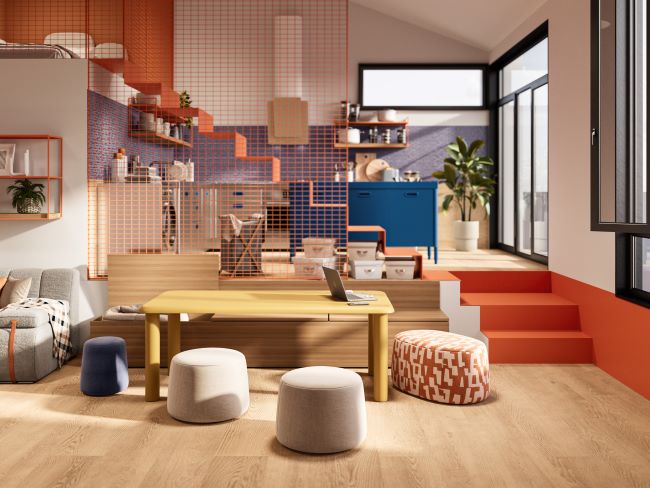
Hotels: from individual wellness to collective wellbeing
After years in which hospitality experiences were associated with constant entertainment and highly visible luxury, today’s travelers are seeking experiences that generate connection, balance, and meaning. The New Habitat 27/28 reveals that 88% of people globally want experiences with purpose.
“We have moved from understanding travel as an expense to seeing it as an investment in quality of life, health, knowledge, and personal development,” explained Daniel Mayo of Vivood.,
Guest comfort and experience have become the top priority for 89.4% of hospitality professionals, ahead of factors such as brand identity, inclusive design and sustainability. Hospitality design is therefore evolving beyond aesthetics to become a strategic tool capable of addressing new expectations and needs.
“The true luxury today is the ability to disconnect, and that means integrating services almost invisibly, without noise or ostentation,” said Marta Palazuelo of HBA.
One of the most significant shifts identified by the report is the evolution of the wellness concept. Rather than focusing solely on individual self-care, shared experiences such as communal saunas, guided rituals, wellbeing clubs, and activities that encourage guest interaction are becoming increasingly prominent. Wellbeing is no longer viewed purely as a private experience but as a means of fostering social connection.
This search for balance is also driving demand for nature-based alternatives and escapes from overcrowded destinations, supporting the growth of concepts such as glamping, astrotourism, and accommodation integrated into natural surroundings. At the same time, in a more demanding economic climate, the report identifies the rise of shorter, more frequent breaks grouped under the concept of Ordinary, Elevated.
“The most valuable experiences are those that leave a lasting emotional or personal impact,” explained Naji Safi of DLR Group.
This transformation is already influencing investment decisions. Spending on hospitality design is expected to increase by 7.1% over the next year—the highest rise among the four sectors analyzed—and clients would be willing to increase investment in this area by 16.2% to improve the sustainability of their establishments.
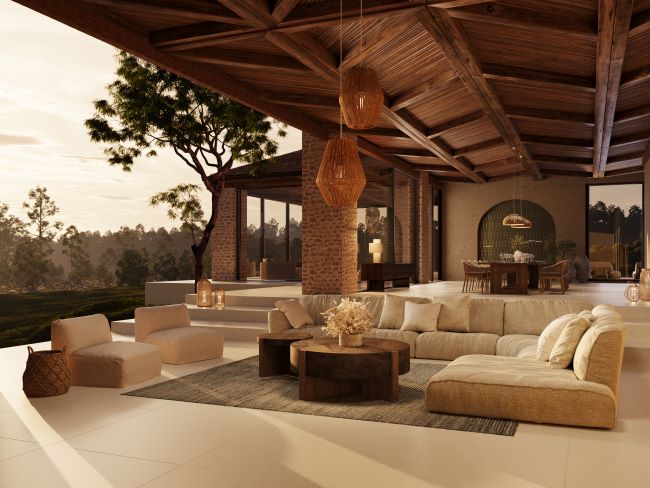
Offices: the workplace experience begins before reaching your desk
The office is undergoing a profound redefinition. In a world where work can be carried out from multiple locations, the question is no longer where people work, but what motivates them to come into the office. Workplace environments are therefore shifting from being viewed as operational costs to being recognized as strategic investments that attract talent, drive innovation, and strengthen organizational culture.
The report shows that employee health and wellbeing are the leading priority for 28.4% of workplace professionals, ahead of factors such as flexibility and creativity. This evolution is expanding the traditional boundaries of the office. Through the concept of ”street-to-seat,” the workplace experience is understood as an entire journey rather than simply what happens at a desk.
Building location, accessibility, surrounding amenities, transition spaces, and shared areas are becoming integral parts of the employee experience and help strengthen employees’ connection to their organization. As architect and urban planner Francesca Heathcote Sapey of Sapey + Partners explained, “The workplace experience does not begin when you walk through the office door, but throughout the journey that precedes it.”
At the same time, offices are increasingly incorporating services and experiences that are difficult to replicate at home. Restaurants, terraces, gyms, auditoriums, event spaces, and informal meeting areas are being integrated into workplace environments to encourage spontaneous interaction, creativity, and relationship-building.
“Today, every decision must be grounded in research, connecting design with performance, inclusion, and people’s real needs,” noted Megan Dobstaff, Design Director at Gensler London.
According to The New Habitat 27/28, investment in workplace design will increase by 5.1% over the next year, driven by demand for environments that are more flexible, experience-led, and aligned with evolving professional expectations.
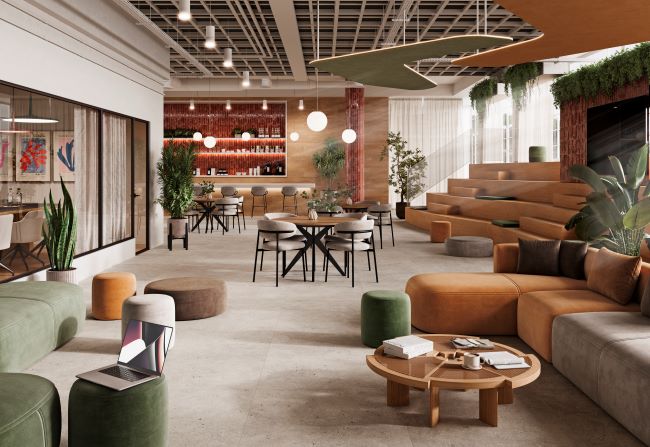
Retail: from point of sale to space for experience and community
Despite the continued growth of e-commerce, physical retail retains a strategic role for brands. Its unique value lies in what online shopping cannot replicate: human interaction, sensory experiences, and the ability to build community.
“A physical store allows a brand’s universe to be brought to life in a way that e-commerce simply cannot,” noted Cecilia Guarás of Bobo Choses.
In this context, the report identifies the rise of the “meaning economy,” a trend that transforms stores into places where activities extend beyond purchasing. Events, workshops, product discovery, and shared experiences turn retail spaces into environments capable of strengthening emotional connections between consumers and brands. Flexibility is becoming a strategic priority in response to this new reality, with 23.4% of professionals identifying the ability to adapt stores to different uses, activations, and experiences as one of the sector’s main design challenges.
Artificial intelligence is also beginning to shape the retail experience, although in a clearly complementary role. While digital assistants facilitate recommendations, product location, and more efficient payment processes, human interaction remains essential when trust, advice, and personalisation are required.
“Technology should take care of operational tasks—stock management, product location, and payment—so that physical spaces can focus on enjoyment, inspiration, and building more meaningful relationships with customers,” said Leticia Yangüela Martí of HMY, specialist in national and international brands and retail projects.
These changes are accompanied by the rise of infiltrated retail, a trend that blurs the boundaries between commerce, culture, leisure, and everyday life. Stores are no longer conceived as isolated spaces but are becoming more naturally integrated into cities and daily routines, giving rise to hybrid formats that combine the functions of a shop, café, gallery, library, and meeting place. The result is a more open, flexible, and context-connected retail model in which the experience is valued as highly as the product itself. Investment reflects this shift, with spending on retail design expected to increase by 4.3% over the coming year.
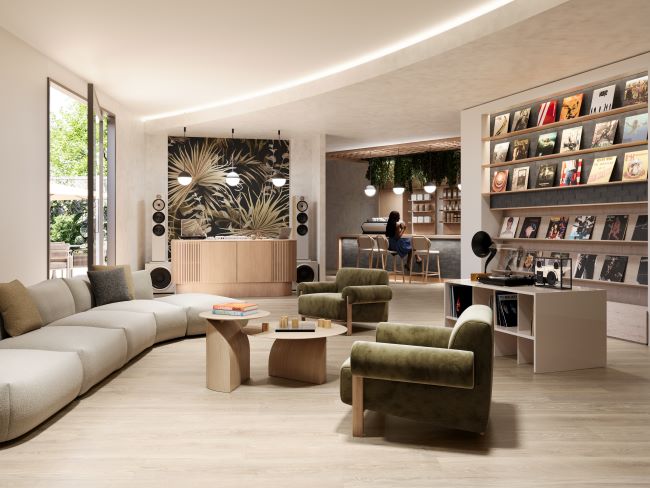
Ultimately, beyond the specific characteristics of each sector, The New Habitat 27/28 identifies a common trend: spaces are no longer designed for a single purpose but are increasingly shaped around ever-changing ways of living. Design is moving away from grand narratives and focusing on a fundamental challenge: demonstrating how spaces tangibly improve people’s lives.
Access the full report here.
About APE Grupo
APE Grupo is a leading Spanish company in the ceramic industry, specializing in the creation of distinctive spaces through an extensive range of ceramic wall and floor tiles, together with advanced technical solutions for architecture and interior design. Established as a business group in 2016, the company’s origins date back more than 30 years. Today, APE Grupo brings together the brands APE, Carmen, XLINING, and Ilbagno, supported by a specialist technical office that provides advanced architectural and interior design solutions. APE Grupo markets its products both domestically and internationally and is present in more than 125 countries, reflecting its ongoing reinvestment strategy and commitment to international growth. Exports account for 84% of total sales, with its main markets being France, the United States, the United Kingdom, Ireland, Germany, and Spain. APE Grupo currently has offices in the United Arab Emirates, Australia, France, Russia, Italy, Ireland, and Bulgaria.





, the need to advance toward more sustainable models, and profound social changes affecting the way we live, work, travel, and consume.)