QUESTION
I recently attended an NTCA Workshop where the topic was adhesives. I really enjoyed the training and learned a lot. One of the things the NTCA Trainer discussed was mixing speed and how important it is. This is something I have never really considered before. Can you explain the importance of drill mixing speed when working with thin-set mortars and self-leveling underlayments?
ANSWER
This is an excellent question and a great example of how tools directly impact installation performance.
The most important takeaway is this: always follow the manufacturer’s instructions. Mixing speed is not a guess or a preference—it is a requirement established by the product manufacturer and is critical to achieving the intended performance of the material.
Understanding the differences between products
Thin-set mortars (ANSI A118)
Most thin-set mortars are designed to be mixed at low speeds (typically around 300 RPM). However, there are notable exceptions, with some manufacturers requiring higher mixing speeds for specific formulations. This variation reinforces the need to read and follow the product data sheet, not rely on habit or past experience.
Self-leveling underlayment (Flowable Hydraulic Cementitious Underlayment)
SLUs generally require higher mixing speeds than thin-set mortars. These materials are engineered to achieve a precise flow and consistency, and proper mixing speed is essential to:
- Activate the chemistry correctly
- Achieve proper flow and leveling
- Minimize defects such as pinholes or surface irregularities
What’s happening during mixing (the chemistry)
Both thin-set mortars and SLUs are cement-based materials that rely on cement hydration and polymer dispersion to develop strength and performance. When water is added, the cement particles begin a chemical reaction that forms crystalline structures, while polymers are dispersed throughout the mix to enhance bond strength, flexibility, and adhesion.
Mixing at the correct speed ensures these components are properly wetted, evenly distributed, and fully activated. The result of improper mixing speed is a material that may look acceptable during installation but does not achieve its designed bond strength, density, or durability once cured.
Why mixing speed matters
Regardless of the product, incorrect mixing speed can lead to performance issues:
- Air entrapment:Excessive speed can introduce unwantedair, weakening the cement matrix as it cures while reducing density and potentially affecting bond strength.
- Inconsistent material properties:Mixing too slowly or at the wrong speed can result in uneven distribution ofcement, aggregates, and polymers, impacting workability and open time. The material may not fully blend, leaving dry pockets or poorly dispersed polymers.
- Performance risks:Mortars may not achieve proper bond (or other performance related issues), and SLUs may not flow or cure as designed.
Selecting the right tool for the job
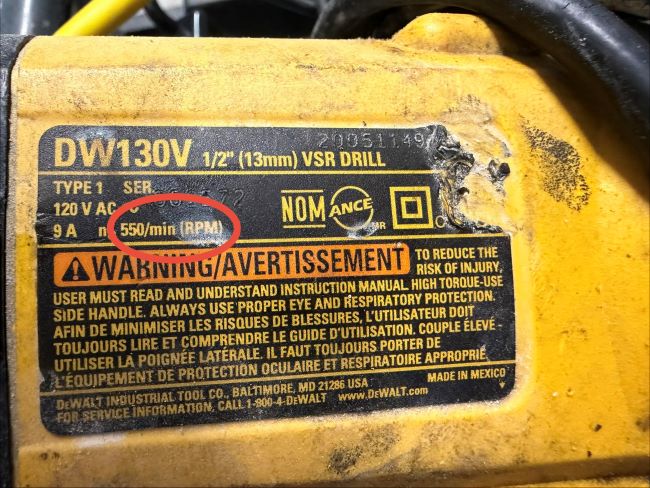
Because different materials require different mixing speeds, choosing the correct drill is critical. When evaluating a mixing drill:
- Check the RPM rating. Most drills list RPM on the packaging.Manufacturer specifications are typically available online (often under “Specifications”).Many drills include a data plate or sticker on the tool itself showing RPM and performance details.
- Use the appropriate drill type. Low-speed, high-torque drills are typically required for cementitious materials.Standard high-speed drills may not provide the control needed for proper mixing.
- Match the tool to the material. Thin-set mortars and SLUs may require different drills or speed settings depending on the manufacturer’s requirements.
Mixing is one of the first steps in the installation process, and it sets the stage for everything that follows. The drill and mixing paddle are not just accessories—they are critical components of the installation system.
Because of the variations between manufacturers and product types, there is no one-size-fits-all approach. The best practice is consistent and clear:
- Read the product data sheet.
- Follow the specified mixing speed and procedure.
- Use a drill that meets those requirements.
Taking the time to match your tools and technique to the material helps ensure the installation aligns with manufacturer expectations—and ultimately leads to better, more consistent results in the field.