QUESTION
I’ve been working with a new designer lately, which has its pros and cons, but I am excited to be installing some more colorful tiles in the near future.
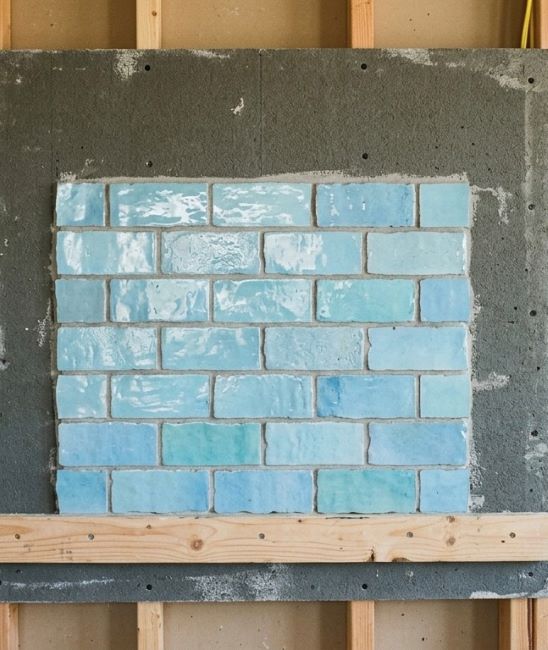
On my upcoming project, I will be installing a handcrafted ceramic tile that has significant size variation, warpage, and inconsistent edges. How do I determine acceptable installation tolerances and manage owner expectations?
ANSWER
Thanks for reaching out. This sounds like a fun project to be involved with.
Handcrafted tile presents a unique challenge because many of the characteristics that make the product desirable—variation in size, thickness, color, texture, edge profile, and surface appearance—are often outside the tolerances established for manufactured tile products.
It is important to understand that true handcrafted tile typically does not meet the requirements of ANSI A137.1, the American National Standard Specifications for Ceramic Tile. Since the installation methods contained in the TCNA Handbook are developed around tile products that comply with ANSI A137.1, installers may find that some of the assumptions regarding tile sizing, warpage, and dimensional consistency do not apply when working with handcrafted materials.
For this reason, installers should rely heavily on the tile manufacturer’s installation instructions and recommendations. Before installation begins, carefully review all available product literature and determine whether the manufacturer has specific requirements regarding grout joint width, layout, lippage expectations, mortar selection, or installation techniques.
In addition, consultation with the setting material and grout manufacturers is strongly recommended. Because handcrafted tile products can vary significantly from conventional tile, the mortar, grout, and installation methods should be reviewed to ensure compatibility with the specific product being installed.
One of the most valuable tools when working with handcrafted tile is a mockup. A representative sample allows the owner, designer, architect, and installer to evaluate the anticipated appearance of the finished work, including grout joint variation, tile alignment, edge irregularities, and overall aesthetics. Obtaining approval of the mockup before installation can help establish realistic expectations and reduce the potential for disputes after the project is complete.
While handcrafted tile may fall outside the dimensional tolerances of ANSI A137.1, the performance requirements of the tile assembly do not change. Substrates should still meet applicable industry requirements for flatness, structural suitability, and preparation. Proper mortar coverage, movement accommodation, and installation practices remain critical to the long-term performance of the installation.
Ultimately, success with handcrafted tile is achieved through communication, planning, and documentation. By understanding the unique product characteristics, consulting with material manufacturers, and obtaining approval of representative mockups, installers can help ensure that the finished installation reflects the artistic intent of the tile while meeting the performance expectations.
Ask the Experts Q&As are culled from member inquiries to NTCA’s Technical Team. To become a member and make use of personal, targeted answers from NTCA's Technical Team to your installation questions, contact Jim Olson at [email protected].