QUESTION
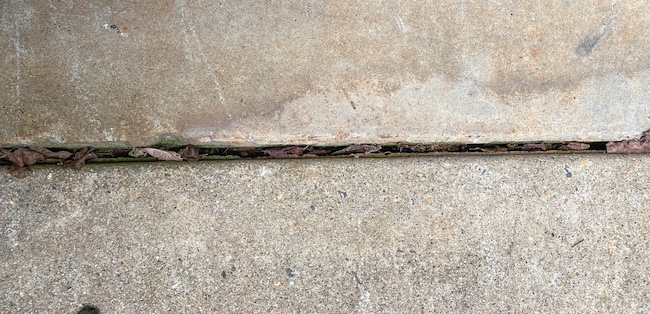
I have a job in Austin, Texas, and the homeowner wants to install porcelain tile on their outdoor patio. The concrete patio floor is an addition to an existing concrete patio floor with rebar connecting the two slabs of concrete with a cold joint. What type of crack isolation /uncoupling membrane should I use to prevent cracking in my environment? How do I treat the cold joint?
ANSWER
Thank you for reaching out with your question about installing porcelain tile on your outdoor patio in Austin, Texas. Based on industry best practices and recognized standards, including the TCNA Handbook and ANSI A108, I’m happy to provide the following information.
Substrate Considerations – Cold Joints
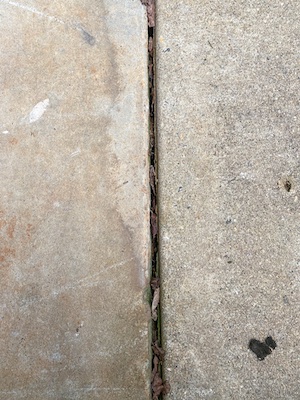
Your situation involves two concrete slabs joined with rebar and a cold joint. A cold joint is considered a non-structural movement joint, but it is still a potential point of differential movement that can telegraph cracks through to a tile installation.
According to the TCNA Handbook, any known cold joint or change in substrate must be treated as a movement joint and must not be tiled over without proper treatment.
Crack Isolation / Uncoupling Membrane: To help mitigate potential cracking caused by slab movement, you should use one of the following:
- Crack Isolation Membrane (ANSI A118.12 compliant): These are specifically designed to prevent existing or in-plane cracks (up to a certain width) from transferring through to the tile.
— When used over cold joints, the membrane manufacturer’s instructions must be followed carefully, and movement accommodation is still required directly over the joint. - Uncoupling Membrane: These membranes uncouple the tile assembly from minor horizontal substrate movement. However, they do not eliminate the need for movement joints directly over cold joints or changes in substrate.
Important Note: While these membranes help mitigate crack transfer, they do not eliminate the need for a movement joint over the cold joint itself.
Treatment of Cold Joint: The cold joint must be honored and treated as follows:
- Movement Joint at Cold Joint: Per TCNA EJ171, a movement joint must be installed in the tile assembly directly over the cold joint, continuing through the tile and setting materials.
- The joint should be filled with a flexible sealant that meets ASTM C920, such as a polyurethane or silicone sealant designed for exterior use.
- Use appropriate backer rod and joint design based on width and depth (see ANSI A108.01 and EJ171).
Environmental Considerations in Austin, Texas
- Austin’s climate includes heat, sun exposure, and occasional freezing, all of which cause thermal expansion and contraction.
- This makes it even more important to use appropriate expansion joints every 8–12 feet (perimeter and field), per TCNA EJ171, and to ensure that tile, setting materials, and membranes are rated for exterior use.
Summary of Recommendations:
- Use an ANSI A118.12 crack isolation membrane or a suitable uncoupling membrane rated for exterior applications.
- Honor the cold joint with a movement joint in the tile assembly directly above it.
- Use ASTM C920-rated sealant in the movement joint.
- Follow TCNA EJ171 for placement and frequency of additional movement joints.
- Confirm with the membrane manufacturer that their product is suitable for this application and how it should be installed over a cold joint.