For decades, imported tile was often viewed primarily through the lens of price and design. However, from 2020 through 2026, the ceramic tile industry experienced a series of unprecedented disruptions that exposed the vulnerabilities of a global supply chain. The question is no longer simply “Where can I buy tile the cheapest?” but rather “Where can I reliably source tile when the next disruption occurs?”
Since 2020, the ceramic tile industry has faced:
- COVID-19 factory shutdowns
- Port congestion
- Container shortages
- Record ocean freight rates
- Energy crisis in Europe
- The Russia-Ukraine conflict
- Red Sea shipping disruptions
- Tariff uncertainty
- Inflationary pressures
- Labor shortages
- Middle East instability affecting fuel supplies and manufacturing
Each event highlighted a simple reality: the farther away your supply chain is, the more vulnerable it becomes.
Following is a chronological overview of the major global disruptions affecting ceramic tile imports from 2020 to 2026 and their related impacts—many of which are still being felt.
| Year | Event | Impact on Tile Industry |
| 2020 | COVID-19 | Factory shutdowns and shipping delays |
| 2021 | Container crisis | Historic-high freight costs |
| 2022 | Russia-Ukraine War | Surging European energy costs |
| 2023 | Inflation and interest rates | Housing slowdown |
| 2024 | Red Sea disruptions | Longer transit times and higher costs |
| 2025 | Tariff uncertainty | Pricing volatility |
| 2026 | Middle East fuel disruptions | Threats to production hubs and shipping lanes |
The strength of U.S. manufacturing
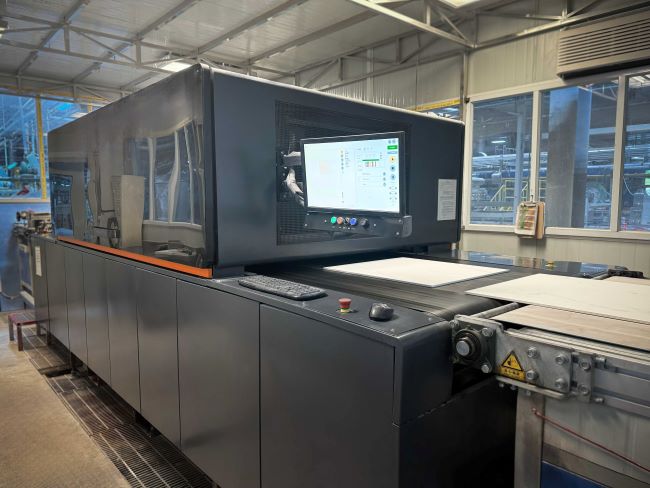
One of the most overlooked facts in our industry is that domestic manufacturers still represent the largest single source of ceramic tile consumed in the United States. According to the most recent Tile Council of North America (TCNA) market data, U.S.-manufactured tile represented approximately 27-29% of total U.S. consumption in 2024-2025, exceeding the market share of any individual importing country. Imports account for roughly 72% of consumption, while domestic manufacturers supply about 28%.
America’s core manufacturing base
Furthermore, many of the U.S. factories have ownership in countries where ceramic tile is the centerpiece of construction and are leaders in both design and technology. This chart lists U.S. tile makers and their locations.
| Company | Parent Company/ Ownership Country | City | State |
| Crossville | AHF/U.S. | Crossville | Tennessee |
| Dal-Tile | Mohawk/U.S. | Muskogee | Oklahoma |
| Dal-Tile | Mohawk/U.S. | Dickson | Tennessee |
| Dal-Tile | Mohawk/U.S. | Sunnyvale | Texas |
| Dal-Tile | Mohawk/U.S. | Florence | Alabama |
| Del Conca | Del Conca/Italy | Loudon | Tennessee |
| Florida Tile | Panaria Group/Italy | Lawrenceburg | Kentucky |
| Landmark | Gruppo Concorde/Italy | Mt. Pleasant | Tennessee |
| MILEstone | Florim/Italy | Clarksville | Tennessee |
| Portobello America | Portobello Grupo/Brazil | Baxter | Tennessee |
| Stonepeak | Iris Ceramica Group/Italy | Crossville | Tennessee |
| Wonder Porcelain | Marco Polo/China | Lebanon | Tennessee |
The true cost of imported tile
When I speak with distributors, dealers, and other industry professionals about domestic ceramic tile manufacturing, the conversation often begins with two perceived advantages of imported products: cost and design. Historically, there has been truth to both arguments. Imported tile has frequently offered attractive pricing, and many overseas manufacturers have invested heavily in design development and product innovation.
However, the events of the past six years have challenged many long-held assumptions about the economics of global sourcing. While imports remain an essential part of the U.S. ceramic tile market simply because domestic manufacturers do not have enough capacity to satisfy total demand, the question is no longer whether imported tile costs less on paper. The more important question is whether it still delivers the lowest total cost to serve the customer.
A balanced portfolio
For distributors and importers, the answer increasingly points toward the need for a balanced portfolio that includes both domestic and imported products. Companies that relied heavily on imports have experienced firsthand how difficult it can be to compete against organizations that have invested in strong domestic supply partnerships.
Too often, the comparison between imported and domestic products focuses only on the purchase price. What is frequently overlooked are the hidden costs and risks associated with global supply chains. These include geopolitical disruptions, ocean freight volatility, port congestion, container shortages, demurrage charges, currency fluctuations, tariffs, and unexpected supply interruptions.
The cost of deep inventory
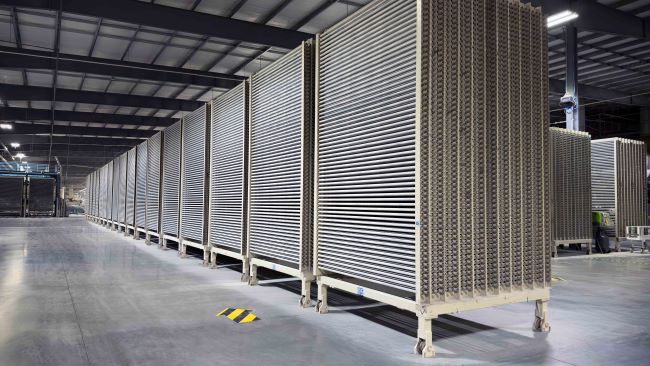
In addition, imported products typically require larger safety stock positions and higher inventory carrying costs. Longer lead times force distributors to commit capital further in advance and increase the risk of forecasting errors. When demand shifts unexpectedly, inventory can quickly become either excessive or insufficient.
Domestic manufacturing offers advantages that are more difficult to quantify but can significantly impact profitability. Faster communication, shorter lead times, improved service levels, quicker problem resolution, and greater supply chain visibility all contribute to a more responsive business model.
The re-stocking speed advantage
Perhaps the most overlooked cost in any sourcing comparison is lost sales. A product that consistently arrives within two weeks may ultimately generate greater profitability than a lower-cost product that requires four months to replenish. When inventory is unavailable, customers often buy from competitors, or worse: purchase alternative products. Those lost opportunities rarely appear on a purchasing spreadsheet, but they have a direct impact on market share, customer loyalty, and long-term profitability.
As supply chains continue to evolve, the discussion should move beyond simple product cost comparisons. The true evaluation is not the cost of the tile itself, but the total cost of delivering that tile to the customer reliably, consistently, and profitably.
So, what does the future hold?
The future is unlikely to be disruption-free. Recent TCNA data continue to show imports representing over 70% of U.S. tile consumption, meaning the industry remains highly dependent on global supply chains.
The strategic question for distributors is not whether imports will remain important—they will. The question is whether their sourcing strategy provides enough balance between imported and domestic supply to protect their business from the next disruption.
So, your question now is probably, “What the hell should I do?”
The events of 2020-2026 have fundamentally changed the conversation around ceramic tile sourcing. Domestic manufacturing is no longer simply a patriotic choice or a regional preference. It has become a strategic business decision. The companies that thrive in the next decade may not be those that buy at the lowest cost, but those that build the most resilient supply chains.
For many distributors, dealers, contractors, and end users, that resilience will increasingly include ceramic tile manufactured in the United States.

Joe Lundgren
Joe is a globally recognized product and marketing expert in the ceramic and stone worldwide markets. He is the owner of Joseph Lundgren Consulting and his specialty is Business Development, Product Management, and Marketing