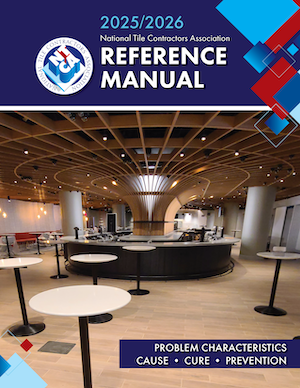
Technical Committee focuses on accuracy and terms important to installers for NTCA Reference Manual update
Everything old is new again. And that goes for the glossary that’s been part of the NTCA Reference Manual for the last 20 years.
A Technical Committee subcommittee led by Chris Woelfel—with key input from NTCA’s Becky Serbin, CTEF’s Scott Carothers, and IMI’s Scott Conwell—is updating and streamlining the glossary and making it even more pertinent to today’s installers and contractors.
“It’s said that you don’t really understand something until you can define it,” Woelfel said. “That was the goal when the NTCA Reference Manual first added a glossary some 20 years ago—and the goal remains the same today.”
Back in the old days when the NTCA Reference Manual was a thick, heavy binder, NTCA members and staff put their heads together to gather information from the industry that would help to educate installers. Some of these terms were general descriptions, some came from manufacturers, and some were more contractor-specific.
The glossary has been a source of knowledge and information over the decades, but with the changes in tile size, setting materials technology, and other factors, the Technical Committee decided it was time to bring the glossary into the 21st century, streamline it, and make it even more useful and accessible.
“Over the years, terminologies—just like standards—change,” said Woelfel. “Technologies morph and modern references to terminologies change.”
Serbin added, “There are currently a lot of manufacturing and raw materials terms [in the glossary]. And there were many terms that the NTCA Reference Manual has that aren’t 100% the same as the definitions in ANSI A108.T.”
(ANSI A108.T, the American National Standard Terminology of Tile Assemblies, is a reference of industry terminology. Learn more at https://whytile.com/2025/05/words-matter-an-introduction-to-tile-terminology/)
With all this percolating—and the fact that the 370-page NTCA Reference Manual and its 23-page Tile Glossary have gotten “fat” over the years (haven’t we all?)—NTCA Executive Director Bart Bettiga requested that the Technical Committee include a review and update of the glossary as an agenda item at the meeting last fall.
“Based on the feedback from the committee, the glossary is being reviewed and will consist of terms that tile contractors need to know,” said Serbin.
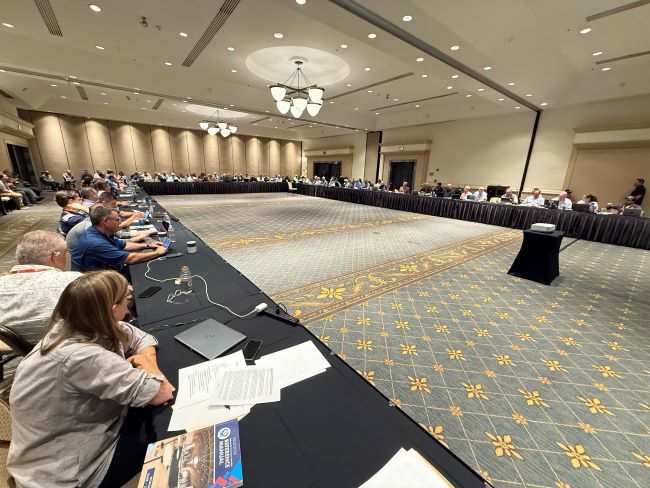
Focus on the installer
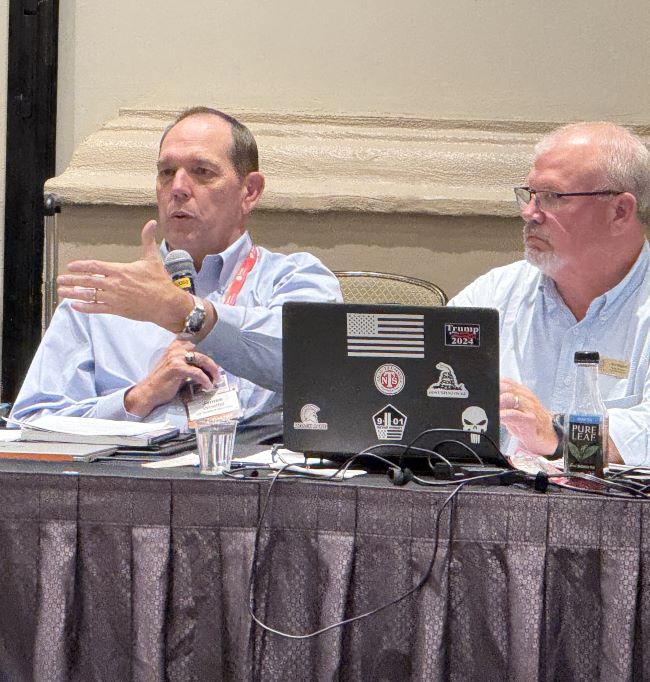
Scott Conwell heads up the A108.T committee. He teamed up with Serbin and Carothers to do the heavy lifting. They reviewed all 23 pages of terms and definitions, cleaned them up and worked with ANSI A108.T Committee members who were also NTCA Technical Committee members to standardize terms and definitions related to ANSI A108T.
“The focus is on how [terms] may conflict, how [they] may align, and what we need to just get rid of because it is not pertinent anymore,” Woelfel said. “The NTCA Technical Committee focuses on the installer. What does the installer need to know? There might be terms we may not need to include because they are already in the ANSI glossary, or they might be manufacturer-specific.”
In addition to whittling down the number of extraneous terms in the glossary, the subcommittee is also reviewing terms that have different meanings for manufacturers and installers. For instance, “‘Coverage and Transfer’ means something different to an installer and to a manufacturer,” Woelfel said. “To an installer, it means the percentage of mortar on the back of the tile and the substrate; to the manufacturer, coverage means how much area the bag will cover in square feet.” The subcommittee is looking to clarify these meanings for specific terminology and list these multiple definitions “just like in a dictionary,” she said.
In addition, the two Scotts bring different perspectives to the definitions, Woelfel said. Scott Carothers brings his experience from CTEF, and Scott Conwell brings an architectural perspective about what needs to be considered when writing plans and specifications. Woelfel added that, “I bring an additional installer perspective from my time at Artcraft,” explaining that these different levels of understanding enrich and clarify the definitions for terms. This is useful, as the subcommittee seeks a common understanding, Woelfel noted.
Also being eliminated are terms that are not specific to the industry or can be looked up in the dictionary, such as “dolomite.” “These are aged or very general terms that are not really something that the tile installer would deal with on a regular basis,” Woelfel explained. But there are also new terms like “pedestals” that are in vogue now, but not currently in the glossary.
Part of the discussion centers around terms a single installer working with handmade tile would need to know, for example, and those installing for mid-sized companies or large companies, as well as installers who work only in residential or commercial.
“There are many considerations we are mindful of,” Woelfel said. “We are not adding any terms unless they are put before the full committee. They have to be relevant to today’s tile industry.”
The subcommittee is currently embroiled in the laborious process of scrutinizing every term, ensuring alignment with ANSI, entertaining discussion and debate, and running them past Technical Committee Chairman James Woelfel and Vice Chairman Nyle Wadford before they are brought into open discussion in the Technical Committee as a whole.
Got feedback? This subcommittee wants it!
The subcommittee is inviting feedback from the tile community as a whole as to what terms need to be added or deleted.
“If someone has been working on a subcommittee and they have terminology that is not in the glossary that they would like to have considered for inclusion, email me at [email protected],” Woelfel said.
Requests will be hashed out in the subcommittee. Any new terms the subcommittee agrees to consider for inclusion will be brought to the entire NTCA Technical Committee for discussion.
NTCA University
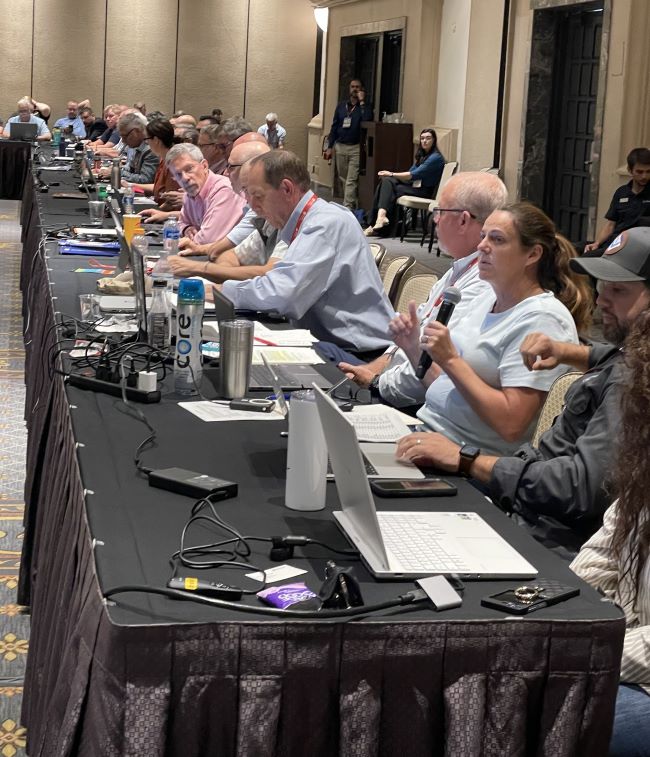
As the glossary is getting updated, it is also being made more accessible. Currently, the 2025–2026 version of the glossary is available as a PDF on NTCA University to support education taking place there.
“Members can find the resource if they search in the course catalogue for ‘glossary,’” Serbin said. “Each year we will update the glossary in NTCA University with the newest published version available, and members with subscriptions to NTCA University can download it.”
Look for the latest glossary version in the 2026–2027 NTCA Reference Manual in August and in NTCA University in late summer next year. The NTCA Reference Manual is a member benefit that entitles each member contractor company to receive the latest edition annually.
To learn more about the publication, visit https://www.tile-assn.com/page/ntca-reference-manual.

Lesley Goddin has been writing and journaling since her first diary at age 11. Her journey has taken her through a career in publishing and publicity, landing her the editor position of TileLetter and its special publications in 2006. Her goal is to educate, inspire, recognize and encourage those in the tile industry -- especially the tile and stone contractor.