QUESTION
How can lippage occur even with lippage kit usage? If lippage is the thickness of a dime, is a customer in the right to demand less lippage?
ANSWER
I’m hoping to provide some insights into the issue of lippage in tile installations, its causes, and how it can be prevented. This information is based on the TCNA Handbook, ANSI A108, and ANSI A137.1 standards.
What is lippage?
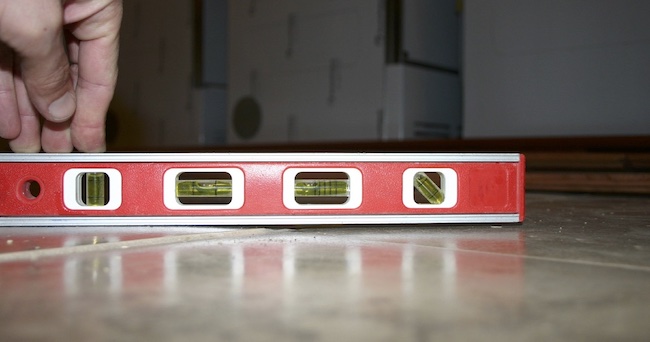
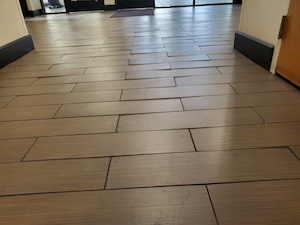
Lippage refers to the difference in height between adjacent tiles, which can create an uneven surface. This issue not only affects the aesthetic appeal of the tile installation but can also pose a tripping hazard.
Causes of lippage
Several factors can contribute to lippage, including:
1. Substrate irregularities: An uneven substrate can cause tiles to be set at different heights.
2. Tile size, thickness variations and warpage of tile: Variations in the size and thickness of tiles can lead to uneven surfaces.
3. Improper installation techniques: Incorrect use of adhesives, selecting the wrong trowel or certain patterns of tile such as a 50% offset (aka – brick joint) may result in lippage.
4. Large-format tiles: Larger tiles are more prone to lippage due to their size and the difficulty in achieving a perfectly flat installation.
Standards for allowable lippage
According to ANSI A108.02, the allowable lippage for tiles is as follows:
- For grout joints less than 1/4″: Allowable lippage is 1/32″ plus the inherent warpage of the tile.
- For grout joints 1/4″ or greater: Allowable lippage is 1/16″ plus the inherent warpage of the tile.
When TCNA or ANSI refers to the inherent warpage of a tile, they are also referring to a tile that meets the specifications of ANSI A137.1. These are the standards and specifications for the manufacturing of ceramic and porcelain tile. All tile – including tile that meets A137.1 – has an allowable amount of warpage. The amount of this warpage varies by the size and type of tile. If a tile does not meet ANSI A137.1 it does not mean it is a “bad tile” but it does mean we are not guaranteed the quality of the tile in regards to color, size variation, warpage etc.
Preventing lippage
To minimize the risk of lippage, the following best practices should be observed:
1. Ensure substrate flatness: The substrate should be flat within 1/8″ in 10′ and 1/16″ in 2′ for tiles with one side greater than 15″. For tiles with all sides shorter than 15″ the substrate should be flat within 1/4″ in 10′ and 1/16″ in 1′.
2. Use proper installation techniques: Follow the guidelines in ANSI A108 for mixing and applying adhesives, and ensure tiles are properly placed during installation.
3. Select appropriate tile: Consider the inherent warpage and size variations of tiles, especially when using large-format tiles.
4. Employ lippage tuning device: Lippage tuning systems can help maintain a flat surface during installation, reducing the risk of lippage. This tool is often misused and is not intended to level a floor, allowing you to bypass the work of substrate flatness and other proper installation techniques.
5. Check tile quality: Ensure that tiles meet the standards set out in ANSI A137.1, which specifies the minimum physical properties and grading procedures for gauged porcelain tiles and panels.
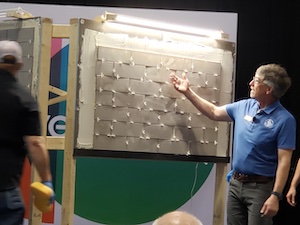
6. Mockup: Both TCNA and ANSI recommend the building of a mockup (sample of tile installed) for the customer to approve the quality of the tile, pattern and workmanship. A mockup may also show things like lippage giving both the customer and the tile installer an opportunity to make corrections before it turns into a bigger problem.
By adhering to these guidelines and standards, you can significantly reduce the occurrence of lippage and achieve an aesthetically pleasing tile installation.
Visual inspection of tile work
The TCNA Handbook details for us how to properly look at finish tile work. I would highly encourage you to read page 42 and 43 of the TCNA Handbook which may further your understanding of inspecting tile work, flatness, workmanship, and lippage. This passage is found on page 46 of the 2024 edition:
“When visually inspecting finished ceramic, stone, and glass tile installations, do so without magnification under the permanent intended lighting and without the use of additional lighting such as flashlight, spotlights, or temporary lights. View the installation 36 inches from walls and 60 inches or normal standing height from floors recognizing the handbuilt aspect of tile installation, any aesthetic concerns not visible at these distances (but apparent at closer distances) are acceptable under industry best practices.”
It goes on to list industry-recognized publications and standards for details on tolerance and allowance in tile work.