

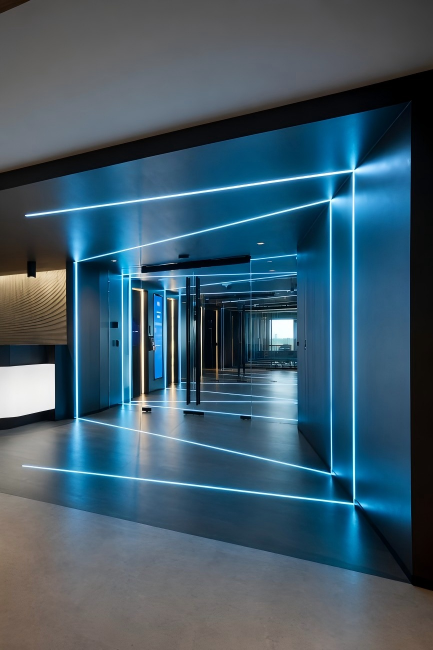
Gauged porcelain tile panels (GPTP) continue to gain traction in commercial construction, offering large-format aesthetics with durability and reduced maintenance. However, successful installation at scale requires careful planning, specialized equipment, and disciplined execution, particularly in active commercial environments.
At the Lennar Corporation corporate headquarters in Miami, Fla., a multi-phase installation highlighted both the opportunities and challenges associated with GPTP in high-rise applications. The project included approximately 8,000 sq. ft. of GPTP wall cladding and flooring across multiple floors, completed over several years.
Porcelain Slab Services, a Fort Lauderdale-based NTCA member contractor company specializing exclusively in GPTP installations, was brought in to execute the work. The company is led by Owner Rich Smith, whose decades of tile experience and dedicated focus on gauged porcelain tile panels have positioned the firm as a specialist in this demanding segment.
The installation covered high-traffic and high-visibility areas, including lobby floors, reception areas, full-height wall cladding, elevator surrounds, and elevator cab flooring.
Panel logistics and scheduling challenges
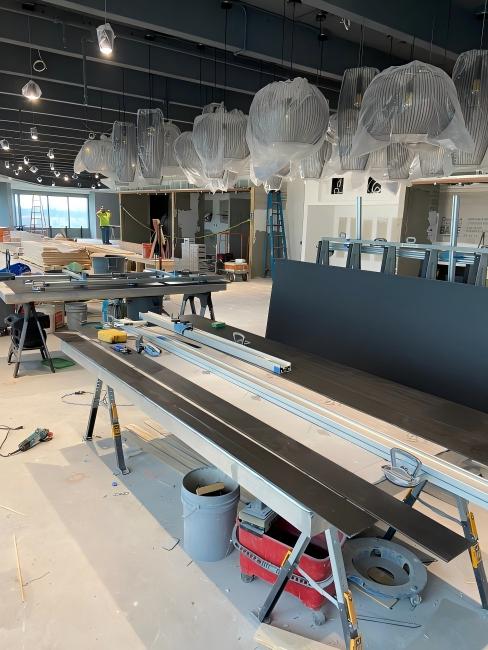
A key challenge was the panel size. At 48” x 110”, the material pushed the upper limits of handling, transport, and cutting precision. In total, approximately 250 panels were installed.
The project was further complicated by its multiphase schedule and the fact that the building remained occupied throughout the installation. Each phase required independent coordination of material delivery, staging, and installation logistics across multiple floors.
“Coordinating delivery, staging, and installation floor by floor while the building remained in use required meticulous planning,” said Smith.
Maintaining consistency across phases—spanning from 2021 through 2026—added another layer of complexity, particularly with regard to substrate conditions and visual continuity.
The work was completed in four phases, beginning in June 2021. A five-person crew handled all aspects of the installation. Given the panel size and jobsite conditions, execution relied heavily on planning and coordination. Panel movement was pre-planned, with no room for improvisation during handling or placement.
“Every panel move was planned, not improvised,” Smith emphasized.
Handling was performed using a suction-based lifting system, allowing controlled movement of large panels in tight, active jobsite conditions. Cutting operations were completed using rail-guided scoring systems designed specifically for large-format porcelain.
In addition to standard cuts, the project required precision detailing for integrated design elements, including LED light rail channels and recessed tracks for security grilles—applications that required repeatable accuracy across multiple phases.
Sigma’s Kera series shines
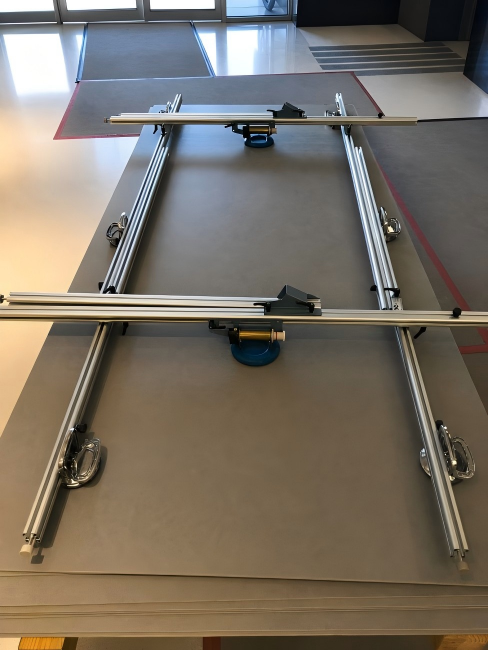
Tool selection was a critical component of the installation strategy. The contractor utilized Sigma’s Kera series systems for all cutting and handling operations, including the Kera Cut, Kera Flex, and Kera Lift systems. These products are distributed in the United States by RTC Products.
“These tools are purpose-built for GPTP,” said Smith. “No other system handles panels of this size safely and accurately at scale.”
Across the full scope of the project, the tools delivered consistent scoring and clean breaks, A Sigma Kera Lift system is used to safely handle and position gauged porcelain tile panels before cutting and installation. minimizing material waste and eliminating rework. Reliability was also a key factor.
“Over a multi-year project, the only thing I replaced was a scoring wheel,” Smith noted.
Handling panels of this size in a high-rise environment typically requires significant manpower and introduces risk during transport and placement. The use of purpose-built lifting and cutting systems allowed the contractor to complete the installation with a five-person crew.
Without these systems, additional labor would have been required to safely manage panel movement.
Kera tools empowered a five-man crew to handle 250 panels!
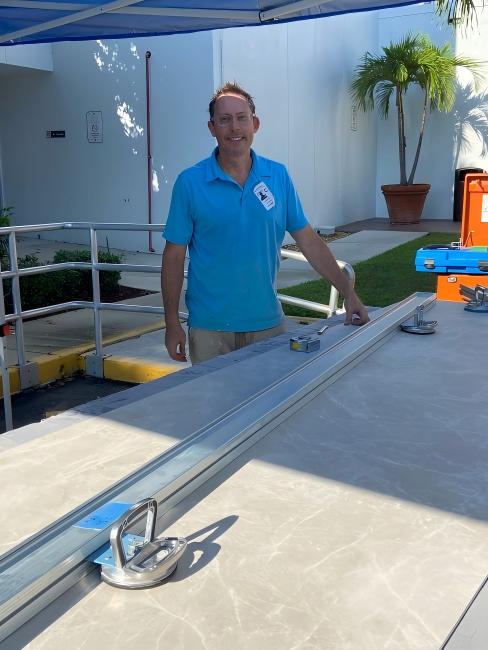
“The Kera tools are the only reason a five-man crew could handle 250 panels at this scale with the precision and safety this project demanded,” Smith said.
Consistent cutting performance also contributed to efficiency by ensuring panels were installed correctly on the first attempt, reducing waste and avoiding delays associated with rework.
One of the primary challenges in multi-phase GPTP installations is maintaining consistent tolerances and appearance across extended timelines. At the Lennar headquarters, the installation achieved tight tolerances and uniform visual results across all floors. Panels installed years apart maintained a cohesive appearance, meeting the expectations of a corporate environment where consistency is critical.
This outcome was the result of controlled processes, experienced installers, and reliable tooling working together throughout each phase.
Purpose-built tools, like those from RTC, improve outcomes
This project highlights several considerations for contractors working with gauged porcelain tile panels in commercial settings. Logistics planning is critical, especially in occupied buildings and multi-phase projects. Panel size increases risk, requiring specialized handling and cutting systems. Consistency must be maintained across phases, and purpose-built tools improve outcomes by reducing breakage, rework, and labor requirements.
“There is no comparable alternative for panels at this size,” Smith emphasized. “If your equipment isn’t designed for GPTP, you’re making the job harder than it needs to be.”
Demand for GPTP continues to grow across commercial sectors, particularly in high-traffic environments such as lobbies, elevator interiors, and feature walls. As panel sizes increase and design expectations continue to evolve, successful installations will depend on a combination of technical expertise, planning, and the use of systems designed specifically for large-format materials.
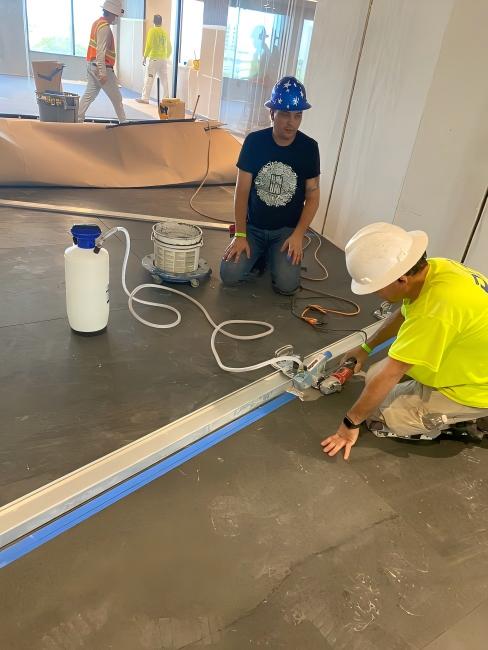








 in high-rise applications. Porcelain Slab Services, which specializes exclusively in GPTP installations, turned to RTC Products for the precision needed for the job.)