There ain’t nothin’ easy or simple about tile. Tile is a permanent finish. It’s beautiful. It’s durable. It lasts a long time when properly installed. It is highly desirable. It increases the value of a structure. Installing it professionally is a great way to make a living.
People generally love their homes. Your home is your refuge, your shelter. Your place to rest, relax, enjoy friends, raise a family, house your goldfish, display your Pokémon collection, store your stuff.
As homes age, they need maintenance, and updates are desirable. That decades-old style might or might not function well after all those years of use. An update could do the home and its occupants a world of good. An upgrade will enhance the life being lived in the home. Sometimes, it’s hard to build or find a new home to buy. Sticking with the one you’ve got and putting some fresh love into it can make good sense.
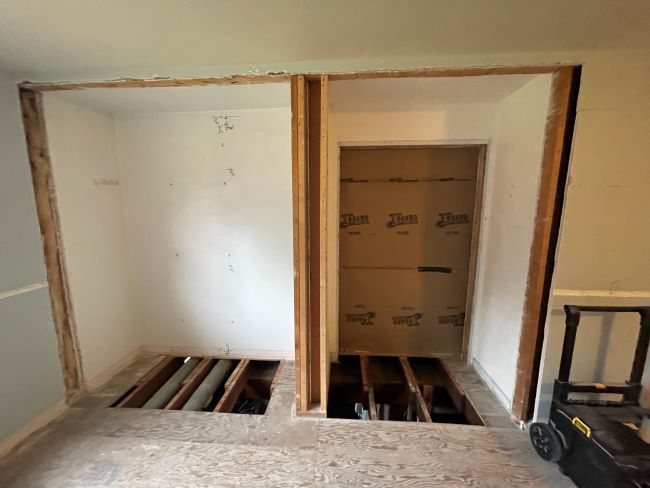
After working primarily as a residential remodeling tile contractor, and now as a homeowner who is currently remodeling a 1960s-era house, I have run into many instances of sprucing up a home by putting tile in places that didn’t have tile before—and which weren’t designed to support a tile installation of any type. Sound familiar?
So, let’s take a basic look at substrates and substructure for setting tile where tile has never gone before, and on a structure that wasn’t designed for tile.
A firm foundation
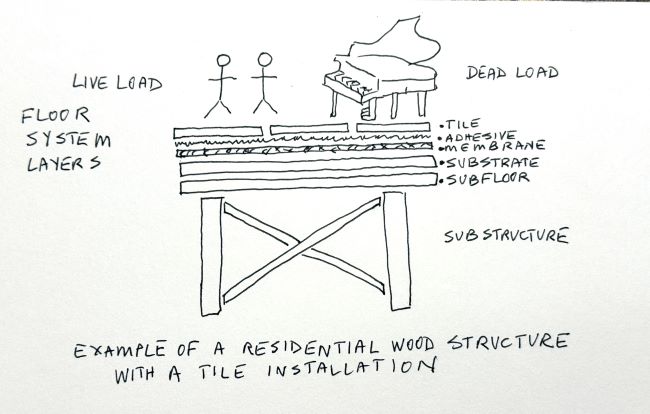
Tile is strong stuff. Some tile is stronger than others, but no tile that I am aware of is designed to be self-supporting. Tile’s job is to be a beautiful, durable surface finish. The layers of the system and the design and condition of the structure beneath it must be able to properly support the installation as if it were to be there for decades—at least for the intended life of the installation or the intended life of the structure.
As a professional contractor doing work for others—unless your business model is to change your company name and phone number after every installation—you should understand the following common considerations for every tile installation. This basic list will help you avoid callbacks for failed installations. Refer to Chapters 2, 3 and 4 of the National Tile Contractors Association (NTCA) Reference Manual for detailed information and guidance to help you with matters related to tile substrates, backerboards, underlayment, and membranes.
Load and intended use: The structure beneath the tile must be able to support the tile and intended use of the installation, including the people using it.
Deflection: The amount of up-and-down or in-and-out movement of the horizontal or vertical structure beneath the tile is called deflection. The amount of deflection across the entire span of an installation and also between supporting structural members like joists or studs is limited. The NTCA Reference Manual’s “General Statement on Deflection” is a great place to get started with your understanding of deflection. You will also find that the Tile Council of North America (TCNA) Handbook for Ceramic Glass and Stone Tile Installation states the minimum deflection ratings for installation methods wherever deflection is a necessary requirement for you to consider.
Bonding: The tile has to be very well stuck to the surface beneath it (known as the substrate), or it will come off. The adhesive has to be the right one, properly prepared and applied. The top of the substrate and bottom of the tile have to be clean with no puddles of water. Learn more about this by attending a free NTCA training event.
Movement: Structures are not usually completely rigid. They are designed to move. Tile doesn’t love movement. Placing a hard, durable tile surface on a structure that is designed to expand, contract, and move up and down, in and out, left and right, can make for real problems sooner or later. There are ways to design and install tile systems to be sure they stay intact (within limits) while stuck to a structure. Learn more about this in tile industry methods and standards in the TCNA Handbook and NTCA Reference Manual or at NTCA or CTEF training programs.
Membranes: I can’t think of a situation where it is not a good idea to install or apply a membrane directly beneath a tile. Membranes are good for helping with:
- In-plane movement (side-to-side/lateral)
- Keeping water and steam away from the supporting structure
- Separating the tile layer from expansion in the structure beneath it Bonding/adhering the tile to the substrate with adhesive
Flatness: This is so important to understand. Read up on this in tile industry methods and standards in the aforementioned publications, and learn about this at NTCA and CTEF training events. Participate in the training and ask many questions.
Layout, joints, cuts, chips, grouting, and finish work: A technically-perfect installation beneath the tile can be considered a failure if the finished appearance is not on par with excellence as defined by accepted tile industry recommendations for handcrafted-tile installations, which are becoming more popular. Owning, understanding, and implementing a few pages from the tile industry methods and standards can be a tile professional’s best friend. The NTCA technical support team is your guide in such matters.
In the December issue of TileLetter, we’ll further explore the complexities of being a residential remodeling contractor who does tile installations.
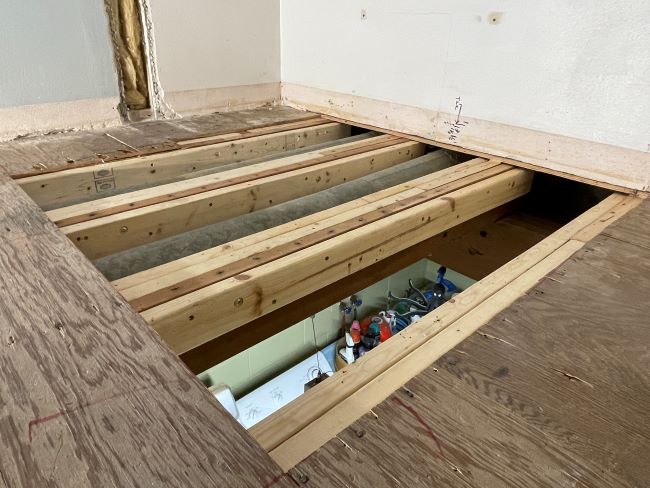
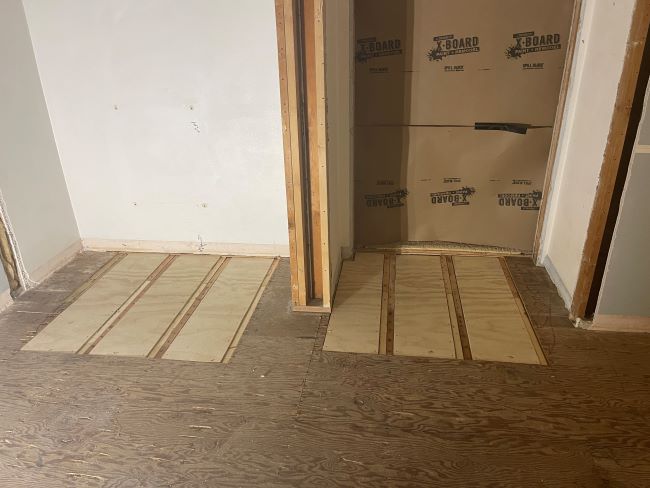
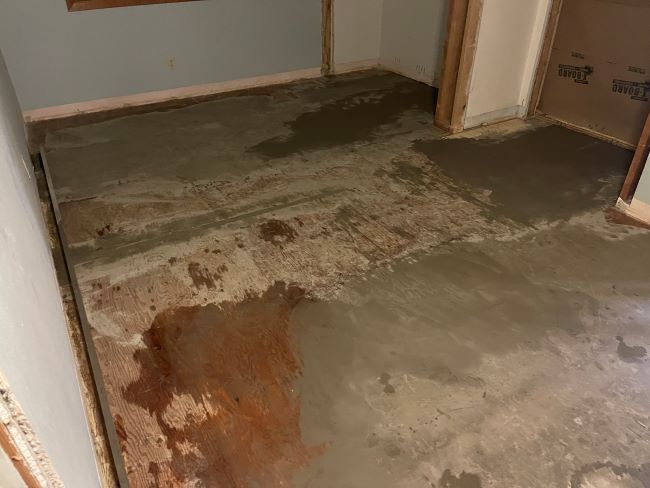
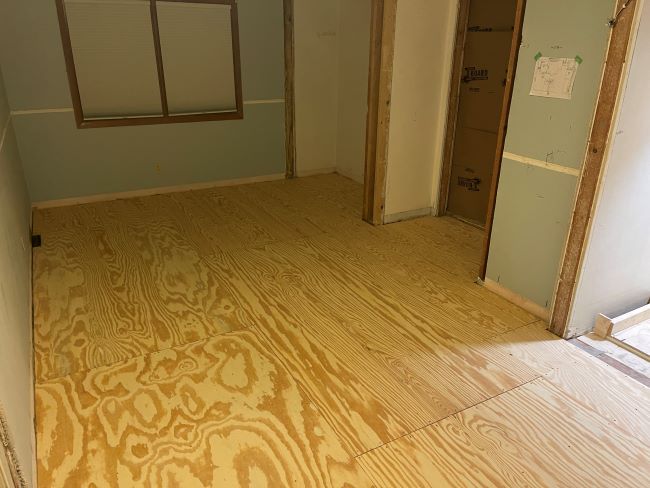
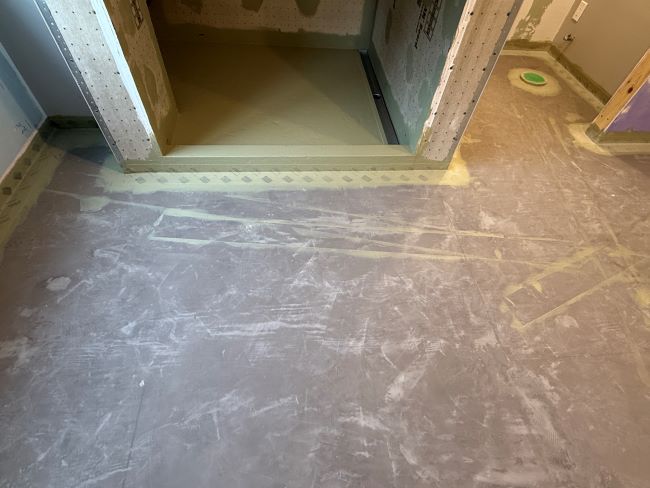
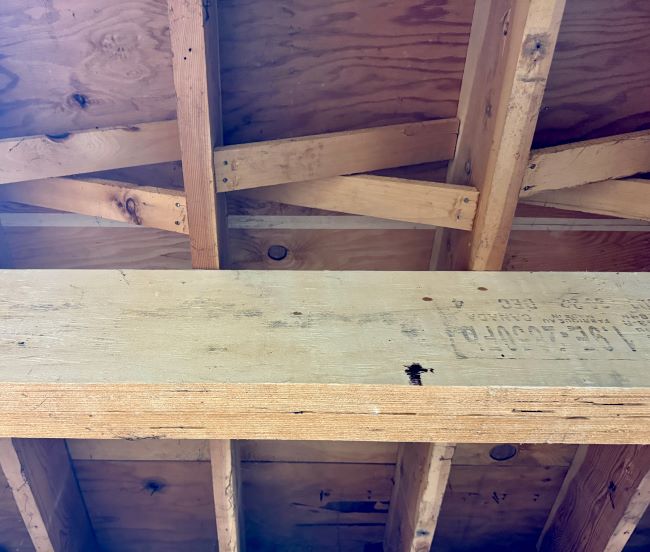
the joists, and as the support for the tile system to be installed on top.

Mark Heinlein
Mark Heinlein, CTI n.º 1112, fue director de formación de la Asociación Nacional de Contratistas de Azulejos (2015-2024) y evaluador de la Fundación para la Formación en Azulejos Cerámicos en el programa de Instaladores Certificados de Azulejos. Antes de trabajar con la NTCA, Heinlein era dueño de Mark Heinlein Surfaces, en Negaunee, Míchigan.