QUESTION
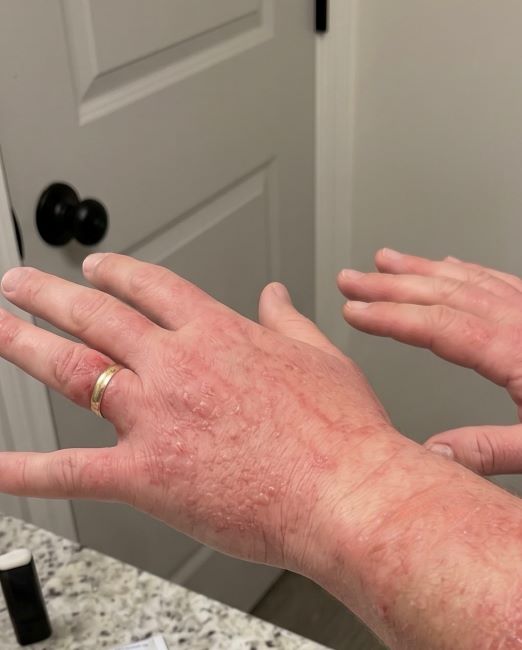
I have been installing tile for more than 20 years and have used epoxy grout many times without any problems. I recently hired a new employee, and while helping me grout a job, he broke out in an itchy rash and hives on his hands and arms. We were both working with the same product, but I did not have any reaction.
Why would epoxy grout affect him and not me? Is it possible that he is allergic to it, and what should I do before allowing him to work with epoxy grout again?
ANSWER
The short answer is that different people can react differently to the same product. His reaction may have been simple skin irritation, or it may have been an allergic reaction. It is not possible to know which one it was just by looking at the rash, so he should be checked by a medical professional before working with that product again.
Epoxy grout normally has multiple parts that must be mixed together. Before those parts cure, some of the chemicals can irritate the skin. Some people can also become sensitized to those chemicals. In simple terms, this means their body has developed an allergy and may react when they come in contact with the product again.
The amount of exposure needed to cause a reaction is not the same for everyone. One installer may get epoxy on his skin several times without noticing a problem, while another installer may react after a much smaller exposure. Cuts, scratches, dry skin, sweating, contaminated clothing, and how long the material stays on the skin can also make a difference.
Your employee may have come in contact with epoxy or similar products at another job or while working on a hobby. What appears to be his first exposure to epoxy grout may not be the first time his body has been exposed to the same type of chemicals.
It is also important to understand that your years of using epoxy grout without a reaction do not mean you can never develop one. Some installers work with epoxy products for years before they begin having problems. Once someone becomes allergic, even a small amount of contact may cause another reaction.
When a skin reaction happens, the employee should stop working with the product, remove any contaminated clothing, and wash the affected area according to the first-aid directions in the product’s Safety Data Sheet. Do not use alcohol, solvents or other harsh cleaners to remove epoxy from the skin. These products can damage the skin and may make the exposure worse.
If the employee has trouble breathing or develops swelling around the face, lips, tongue or throat, treat it as an emergency and seek medical help immediately.
Before using any epoxy grout, read the manufacturer’s instructions and the Safety Data Sheets for every part of the product. Wear the gloves and eye protection recommended by the manufacturer, along with long sleeves or other protective clothing needed to keep the uncured material off the skin. Not every type of disposable glove protects against every chemical, so do not assume that any glove will do the job.
Replace gloves when they become torn or contaminated. Avoid touching your face, phone, tools or door handles with dirty gloves, and clean spills before the epoxy is spread around the work area.
Epoxy grout is a great product when it is used correctly, but experience alone does not protect an installer from a chemical reaction. The best protection is to follow the manufacturer’s safety instructions and keep uncured epoxy off your skin.
Ask the Experts Q&As are culled from member inquiries to NTCA’s Technical Team. To become a member and make use of personal, targeted answers from NTCA's Technical Team to your installation questions, contact Jim Olson at [email protected].