Everyone would agree that workplace safety is important, but why do accidents occur? Many times, accidents happen due to carelessness, haste, or a lack of training. But none of these excuses are valid, especially when someone is injured. The thought that “It will never happen to me” is a false hope that has no future.
Several popular quotes offer some insight. Some may consider them cliché, but they ring true:
- Luck runs out, but safety is good for life.
- Safety isn’t expensive, it is priceless.
- Never give safety a day off.
- Safety is a full-time job; don’t make it part-time practice.
How OSHA can help you maintain a safe working environment
The Occupational Safety and Health Act of 1970 states the following:
“To assure safe and healthful working conditions for working men and women; by authorizing enforcement of the standards developed under the Act; by assisting and encouraging the States in their efforts to assure safe and healthful working conditions; by providing for research, information, education, and training in the field of occupational safety and health.”
The Occupational Safety and Health Administration (OSHA) standards serve all facets of the jobsite, from small residential jobs to large commercial projects. Some folks are fearful of an OSHA inspection, but if requested, OSHA will conduct an on-site inspection noting the areas needing improvement, and will not issue a citation. However, this review should be a wake-up call that encourages the employer to modify and implement safety procedures prior to a subsequent inspection.
It is important to know the safety issues that affect people on the job. OSHA ranks these top 10 situations that result in citations, from the least to the most frequent:
- Machine guards – angle grinders
- Eye protection
- Forklift operation
- Scaffolding
- Fall protection training
- Respiratory protection
- Lockout/tagout (LOTO): Lockout blocks the power source, while tagout provides a prominent warning that the tool is out of service but doesn’t physically eliminate use.
- Ladders
- Hazard communications: Safety Data Sheets (SDS) are detailed documents provided by manufacturers instructing workers and emergency staff on how to safely handle the product.
- Fall protection equipment—the number one safety issue for 15 years straight
PPE
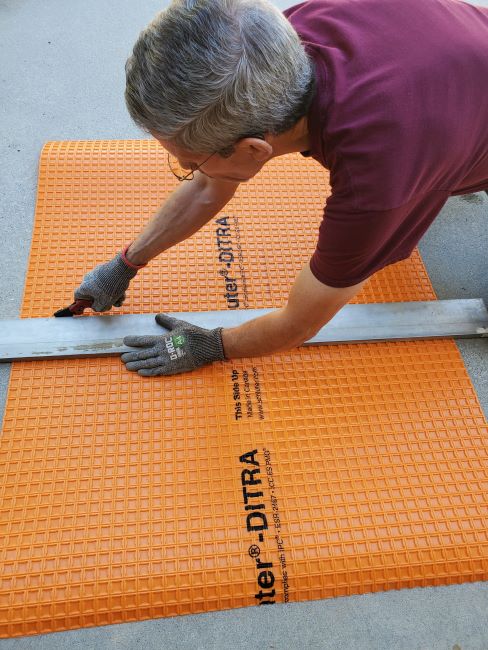
Personal protective equipment (PPE) is designed to protect the worker from jobsite hazards that could cause injuries or illnesses.
Installers need to be extra cautious if they have developed a sensitivity to certain chemicals found on many jobsites, including epoxies (see Ask the Experts on page 58 for more on this issue). In this case, PPE may not effectively protect the worker from the product components. The solution may be the sensitized or allergic person being off-site while the product is in use.
Liquids
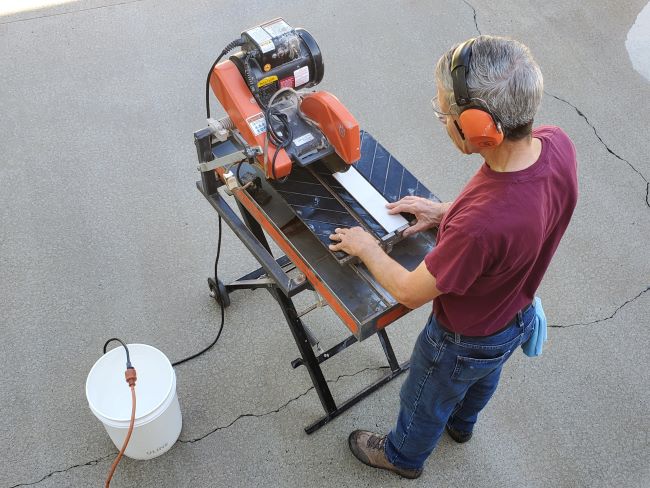
Something as innocuous as water on a floor can be the cause of many slip/fall situations. The operation of a wet saw or wet grinding equipment can allow water to remain on a horizontal surface, causing a person walking through the wet area to lose their footing and fall, risking serious injury. Always keep a mop and wringer bucket close, and require people to mop up spills or wet surfaces to eliminate the problem.
Electricity
Work in the tile industry combines two items that do not play well together: electricity and water. Almost every tile job has a wet saw set up to make difficult cuts that are not possible on a snap cutter. But the electricity in a wet environment can be a shock hazard that can kill. Always use an approved Ground Fault Circuit Interrupter (GFCI) to lessen the potential shock risk.
Written safety plans
Written safety plans play a critical role in protecting employees, while also meeting related OSHA requirements. Numerous providers supply templates that can be used to establish a plan and be updated as the need arises. These plans delineate activities in compliance so employers can avoid fines, define safety responsibilities, reduce injuries, and demonstrate the company’s commitment to safety.
Insurance
Although it is not a direct safety concern, the cost of workers’ compensation (workers’ comp) insurance can be reduced by having a safety plan, instituting and continuing toolbox talks/safety meetings, and working diligently on your safety procedures. Further cost reductions can be achieved by monitoring and reducing your experience modification rate (EMR), also known as your mod rate. Regularly review your EMR spreadsheets for accuracy and reduce injury claim frequency through proactive safety plans.
Lifting
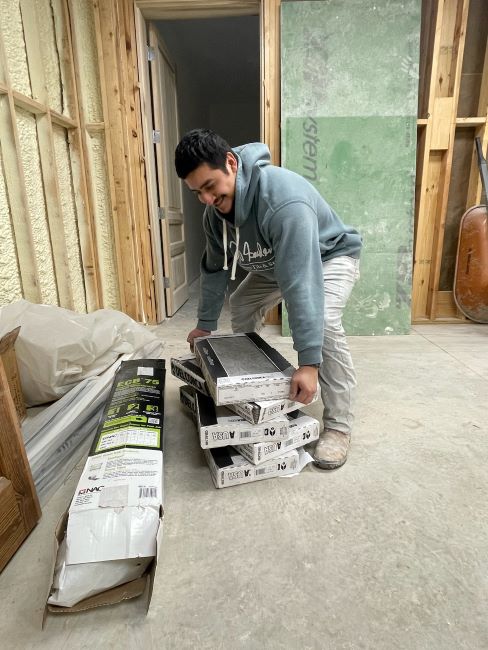
Safe lifting practices are crucial to minimizing or eliminating back injuries. Leg muscles are stronger than back muscles. Squat down to pick up the box or bag, pull it close to the chest, and use leg muscles to stand up, keeping your back straight. Additionally, when stacking heavy boxes, offset the next box from the last one to keep fingers safe, rather than pinching them between the boxes.
Extension cords
Although not required by OSHA, flat extension cords may be the better choice since they do not roll when stepped on. When possible, route extension cords away from travel areas. In high-traffic areas it may be wise to hang the cord along the sides and top of the door frame.
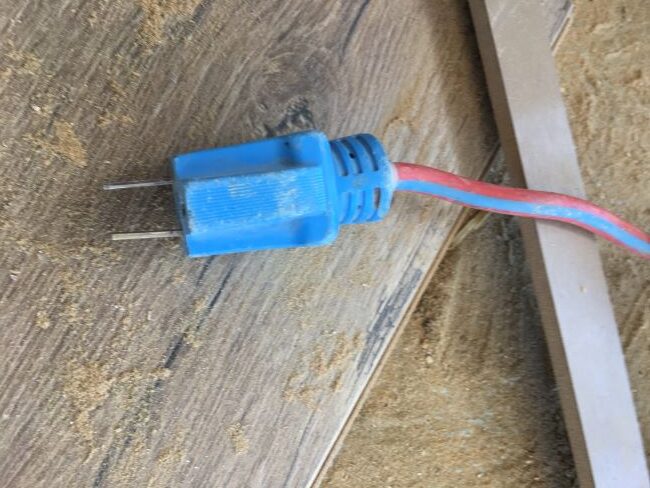
Inspection of an extension cord should be completed on a regular basis to determine if the outer jacket has been cut or severely damaged. Be certain to check that the grounding connector on the male end of the cord is in place and tightly attached. Cords with missing grounding connectors should be tagged out for repair or replacement.
Keep it clean
The jobsite should always be kept clean for a positive appearance, but more importantly, to eliminate trip/fall hazards, especially when carrying heavy objects.
Ladders and scaffolds
OSHA has strict requirements on the proper placement and erection of ladders and scaffolding. Never stand above the manufacturer’s recommended step level on ladders, and do not use the ladder rungs or platforms to store tools or materials that could fall and injure a person below the ladder.
How CTEF safeguards the site
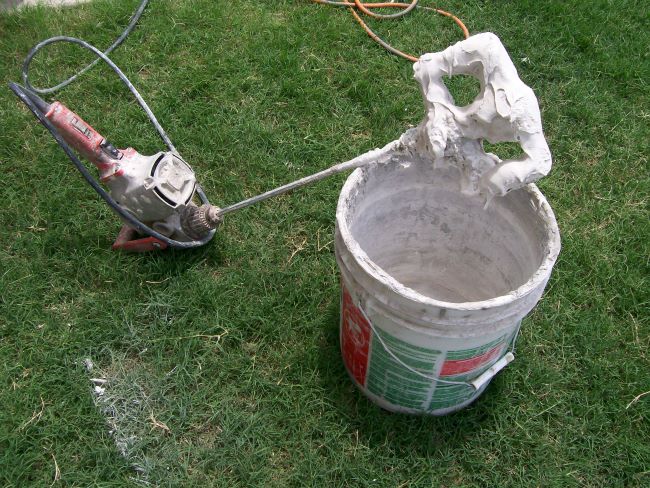
During training classes and certification testing, the Ceramic Tile Education Foundation (CTEF) utilizes some simple safety practices.
- In wet interior environments, place the extension cord connection on the open top of a bucket to segregate it from moisture and a possible shock hazard.
- Always unplug the thinset mixer when not in use, and particularly when it is being cleaned.
- The use of cut-resistant gloves when using a utility knife or other sharp tools is mandatory.
- Wearing nitrile gloves when mixing and using thin-set mortars and grouts protects your hands from the drying effect of these products.
Always think before acting. It could save your life or the lives of those around you.

Scott Carothers
Scott Carothers is the Acdemic Director for the Ceramic Tile Education Foundation (CTEF) and is responsible for the creation of the Certified Tile Installer (CTI) program, and is involved in the creation of the Advanced Certifications for Tile Installers (ACT) program as well as providing training to others in the tile industry.
Carothers has been involved in the ceramic tile industry for nearly 40 years and was the owner of a successful retail and installation firm prior to CTEF. He has served as President and Chairman of the Board of the National Tile Contractors Association (NTCA), Chairman of the NTCA Technical Committee, was named the NTCA Tile Person of the Year in 2005, and the NTCA Ring of Honor recipient in 2013. He is a voting member of the ANSI and the TCNA Handbook committees.