QUESTION
As 2’ x 4’ tile and gauged porcelain tile panels (GPTP) become more common in both residential and commercial projects, are the same mortars used for standard large-format tile appropriate for these larger—and sometimes thinner—panels? What type of mortar should installers be looking for when selecting a product for tile of this size? Additionally, how do coverage requirements and trowel selection differ when installing panels and XL tile compared to more traditional 12” x 24” tile?
ANSWER
Thank you for reaching out with this great question. There’s a lot to unpack here!
As tile continues to evolve, it is important to clearly define what we mean by “large.”
*A large-format tile (LFT) is any tile with one side greater than 23”.
*A gauged porcelain tile panel/slab (GPTP) is defined as a panel that is one square meter or larger. These products typically range in thickness from:
- 3.5 mm to 4.9 mm for wall applications.
- 5.0 mm to 6.5 mm for floor and wall applications.
These products are not simply larger versions of traditional tile. They require greater precision in substrate preparation, mortar selection, and installation technique.
ANSI A108 specifies that any tile with one side greater than 15” requires the substrate to meet a flatness tolerance of:
- 1/8” in 10’
- 1/16” in 24’
These are minimum requirements. As tile size increases, substrate flatness becomes increasingly critical. Larger tile (and panels) will not compensate for irregularities—they will magnify them. Many bond and coverage issues attributed to mortar are actually substrate preparation deficiencies.
Mortar performance

As tile size increases, mortar performance becomes more important. Most U.S. mortar manufacturers label their packaging according to ANSI A118 classifications, which indicate the testing the mortar has passed. For example:
- ANSI A118.1 – Dry-set mortar
- ANSI A118.15 – Improved modified dry-set cement mortar
You may also see letters following the ANSI designation:
- F – Fast setting
- H – Large and heavy tile
- T – Sag resistance
- E – Extended open time
These classifications and designations provide important performance information. As tile formats increase, installers may need mortars with enhanced performance characteristics such as improved bond strength, extended open time, or non-sag/non-slump properties. Always confirm mortar selection with both the mortar manufacturer and the tile manufacturer to ensure compatibility and compliance with installation instructions.
(Ed. Note: For a full breakdown of adhesive standards and applications, check out this article.)
Coverage
Coverage becomes more critical as tile size increases. For standard tile installations:
- 80% minimum coverage in interior dry areas.
- 95% minimum coverage in wet areas and exterior installations.
- Full support under edges and corners is required.
For gauged porcelain tile panels/slabs (GPTP/S):
- 80% minimum coverage on walls.
- 85% minimum coverage on floors.
- Full support under edges and corners is required while reducing air entrapment.
Equally important is proper technique:
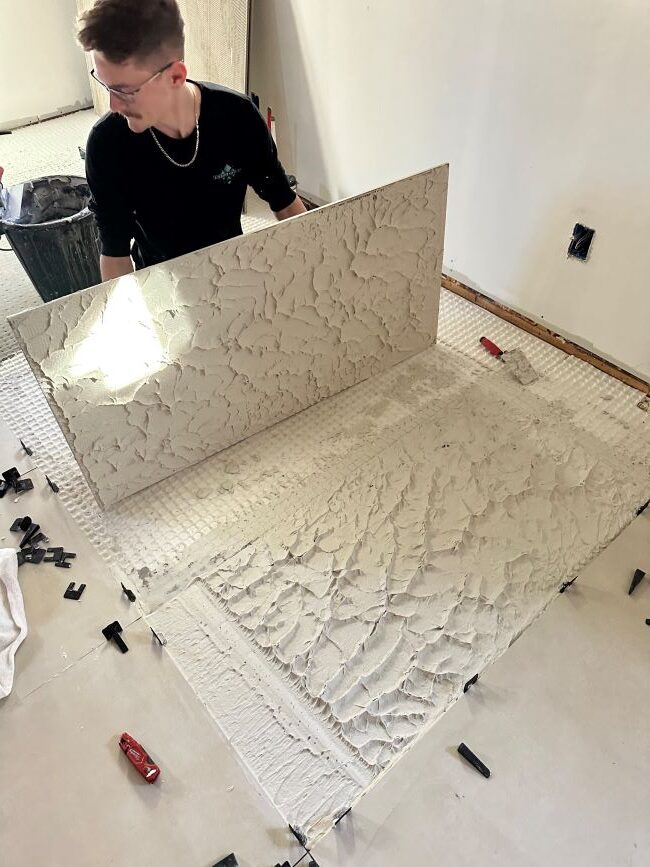
- Comb mortar in straight, parallel ridges.
- Trowel in the shortest direction of the tile.
- Embed tile or panels perpendicular to the ridges.
- Use proper beating tools or vibration systems when installing panels.
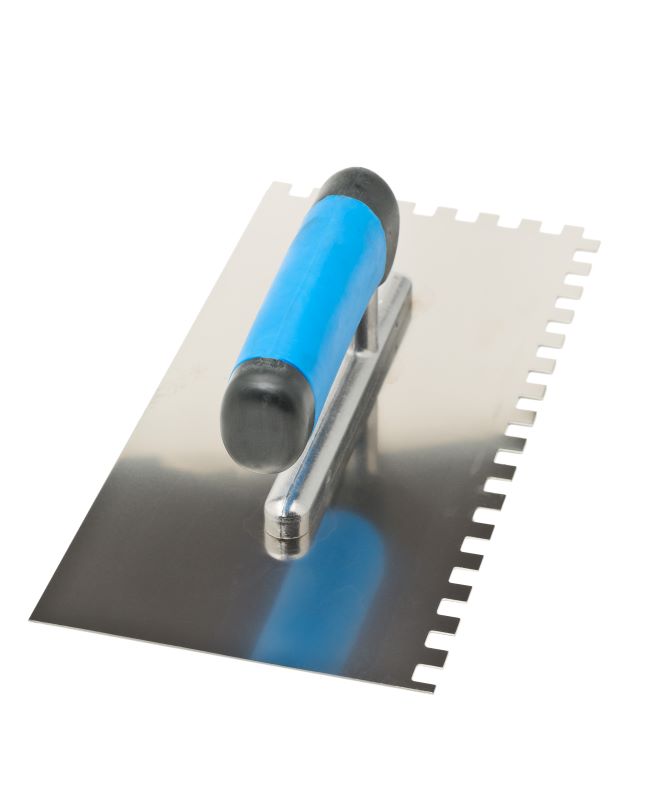
Coverage is not achieved by notch size alone. It is the result of proper substrate preparation, mortar selection, trowel design, and installation technique working together. As tile formats grow larger (and thinner), there’s more opportunity for error. The fundamentals of tile installation have not changed—but the precision required has increased.
The next generation of tile installation demands a higher level of technical awareness and execution. Understanding substrate tolerances, mortar classifications, coverage requirements, and proper trowel techniques is essential for success with today’s large-format tile and gauged porcelain panels.
I would highly recommend attending one of NTCA’s Interior Installation of Gauged Porcelain Tile Panels/Slabs Regional Training Programs. These hands-on programs follow recognized industry standards and provide practical, real-world instruction that will allow you to build confidence and give you the knowledge needed to succeed as tiles become larger.
To learn more about upcoming training opportunities, visit www.NTCATraining.com.