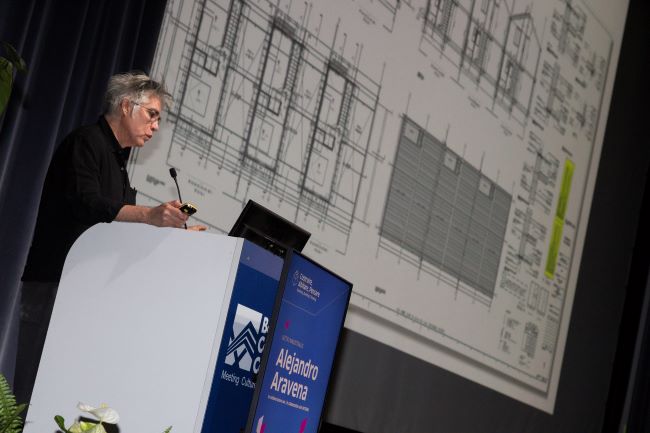
From rebuilding homes after natural disasters to shaping safe spaces for survivors of sexual violence, Chilean architect Alejandro Aravena reminds us that true innovation starts with listening to human stories.
At Cersaie, an international hub where innovation in tile, stone and bathroom furnishings, cutting-edge materials, and striking design usually steal the spotlight, Chilean architect Alejandro Aravena offered a grounding, deeply moving reminder: architecture isn’t just about impressive structures. At its core, it’s about people, dignity, and the profound opportunity we have to build a more compassionate world. That message was grounded in this tile-centric global exhibition but transcended it to touch every place where humanity lives, thrives, or is struggling.
Delivering his Lectio Magistralis as part of Cersaie’s “Building, Dwelling, Thinking” series, Aravena walked us through three distinct areas of his work. Each showcased how thoughtful, empathetic design can tackle some of humanity’s toughest challenges: social housing, post-disaster recovery, and supportive environments for survivors of sexual violence.
While these projects span vastly different scales and contexts, they are bound by a single, powerful philosophy: meaningful solutions begin with genuinely understanding the human beings who will live with the results.
Building ‘half houses,’ opening whole new doors
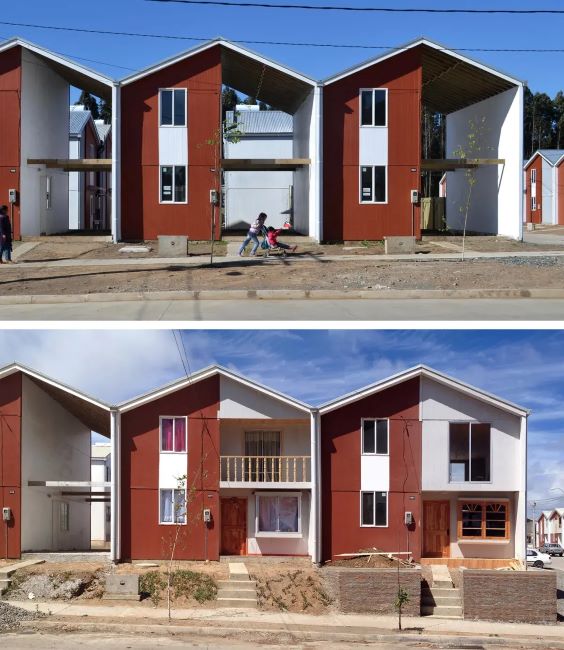
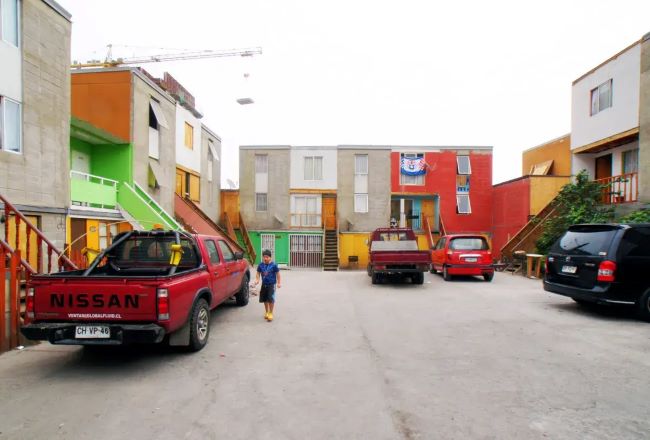
Aravena, the founder of the Chilean architecture firm ELEMENTAL, has long made waves by turning the traditional social housing model on its head through pioneering an unconventional concept: the “Half House.” ELEMENTAL designs and builds the most complex, costly parts of a home such as the structural frame, roof, and essential utility infrastructure. Families are then handed the keys to a safe, beautifully engineered foundation that they can expand step-by-step over time as their finances allow.
Far from an incomplete compromise, this approach fundamentally reframes affordability and pride of ownership. Celebrated projects like Quinta Monroy and Villa Verde show how this philosophy grants families access to prime urban land, empowering them to invest in, expand, and truly personalize their own living spaces for generations to come.
At the heart of Aravena’s vision is a simple truth that people are never just passive recipients of design. Great architecture simply creates room for that human reality to blossom.
Rebuilding after tragedy, responding fast without losing focus
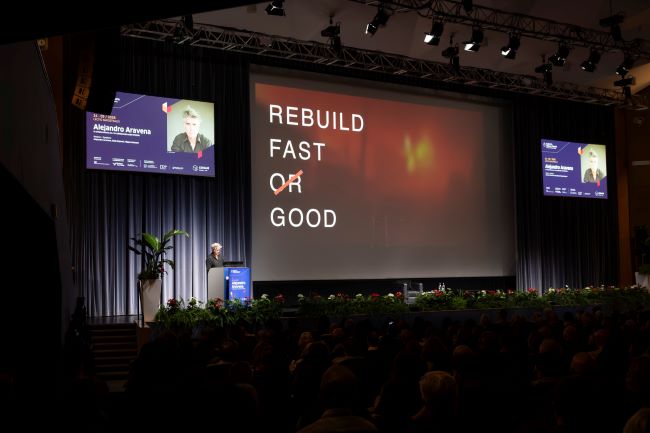
Aravena also shared ELEMENTAL’s work supporting coastal communities in Chile following devastating wildfires. In the wake of disaster, time is of the essence. Families need immediate shelter, communities need stability, and recovery simply cannot wait.
Yet that very urgency brings a delicate dilemma of how to build quickly without compromising quality. Aravena reflected on navigating this exact balance of meeting immediate human needs while preserving the craftsmanship, intention, and lasting value that true healing requires.
It’s a tension that extends far beyond the realm of architecture. Whether recovering from a natural calamity or a personal life crisis, the urge to find a quick fix is strong. But Band-Aid fixes rarely provide the solid ground people need to move forward with confidence. Aravena’s journey challenges us to look beyond quick fixes to truly empower people to rebuild their lives from the ground up.
Designing alongside survivors, not just for them
Perhaps the most emotionally gripping part of Aravena’s keynote centered on Hospital de la Paz (Peace Hospital) in Colombia, a sanctuary dedicated to serving survivors of sexual violence. Rather than designing from an ivory tower, Aravena and his team sat down with survivors, weaving their lived experiences, vulnerabilities, and voices directly into the spatial layout. This kind of deep, participatory design is essential when crafting environments meant to hold individuals navigating profound trauma.
This portion of his talk felt intensely personal to me. As a volunteer at House of Cherith at City of Refuge in Atlanta, where we support women overcoming sex trafficking and exploitation, I see how critical safe, welcoming spaces are. Recovery isn’t linear—nor is it quick. It demands compassion, patience, and surroundings where people feel cherished and empowered to envision a fresh start.
That is precisely why Aravena’s words resonated so deeply with me. His work is a beautiful affirmation of why we must listen to those most impacted by a problem and invite them to co-create the path forward.
Better than doing nothing; embracing imperfect progress
One of my favorite takeaways from the keynote was a refreshingly practical piece of wisdom: we can never let the pursuit of a perfect solution paralyze us from doing real, impactful good today.
Affordable housing, disaster relief, and holistic recovery support cannot be solved overnight with a single project or initiative. There will always be constraints, tough trade-offs, and lessons to learn along the way. But we can listen, collaborate, and we can use what we have to build something far better than what existed yesterday.
That principle applies to architecture, the tile industry, and the ways we serve our communities. The most successful solutions are not necessarily those that look perfect on paper. They are the ones that respond to real needs and make a meaningful difference in people’s lives.
In a beautiful moment of grace, Aravena concluded his presentation with a song performed by female survivors of sexual exploitation, bringing the whole room back to the heartwarming, human core of this work.
I left with a renewed appreciation for the power of design to do more than create beautiful spaces. At its best, design can offer safety, restore dignity, and help people move forward.
Do yourself a favor and watch the full presentation here, and don’t miss the stunning song at the end: Watch Alejandro Aravena’s Keynote Lecture at Cersaie