Standards published by the American National Standards Institute (ANSI) provide guidance to the tile contractor in all aspects of tile work, but ANSI standards are especially critical in commercial installations. These worksites can result in many trades attempting to complete their portion of the project while vying for adequate space and the protection necessary to do so.
We will take a deep dive into ANSI A108.01 General Requirements: Structures, Substrates, and Preparation for Tile, which includes a wealth of jobsite requirements offering workflow guidance, jobsite conditions, and safeguards for completed work. Realize that these directly-quoted statements from ANSI are United States tile industry standards, not merely suggestions.
2.1.1 Responsibilities of Other Parties: “The owner shall communicate in writing to the design professional and/or general contractor the intended use of the tile installation. The design professional and/ or general contractor shall provide the project design necessary for the expected live load, concentrated loads, impact loads, and dead loads including weight of the tile and setting bed. The tile contractor shall not be responsible for structures or substrates not compliant with applicable building codes, or for verifying compliance with applicable building codes unless the tile contractor designs and installs the backing assembly including the structure, and/or substrate.”
The latter portion of this standard is extremely valuable to the tile contractor since it removes the responsibility for structures and substrates that do not meet the applicable building code requirements.
2.1.2 Substrate Requirements: “All substrates shall be clean, free of all contaminants such as sealers, coatings, dust, oil, wax, curing compound, and other coatings.”
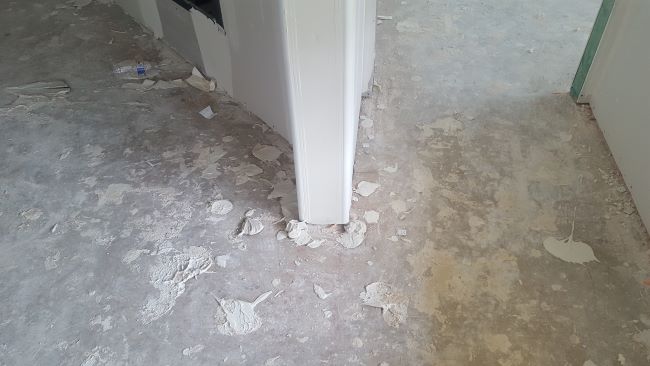
2.1.5 Movement Joints: “Movement joints are required for tile work in vertical and horizontal surfaces, both interior and exterior.”
2.1.5.2 Responsibility of the Design Professional: “The design professional shall locate and detail movement joint locations.”
Many times, the design professional will assume that the tile contractor is responsible for locating and detailing the movement joints. This is not the case and is very effectively written: “The design professional shall locate….” The tile contractor should never assume this responsibility.
2.1.5.3 Sealant: “The design professional shall specify the required sealant for the project. Sealant performance tolerances should conform to ASTM C920 for type, grade, and use preparation of opening left by the tile contractor and installation of backup strip.”
2.1.5.4 Perimeter and Field Movement Joints: “Perimeter and field movement joints within a tile installation are essential and required. Note: For additional information on movement joints, refer to EJ171 of the TCNA Handbook for Ceramic, Glass, and Stone Tile Installation.”
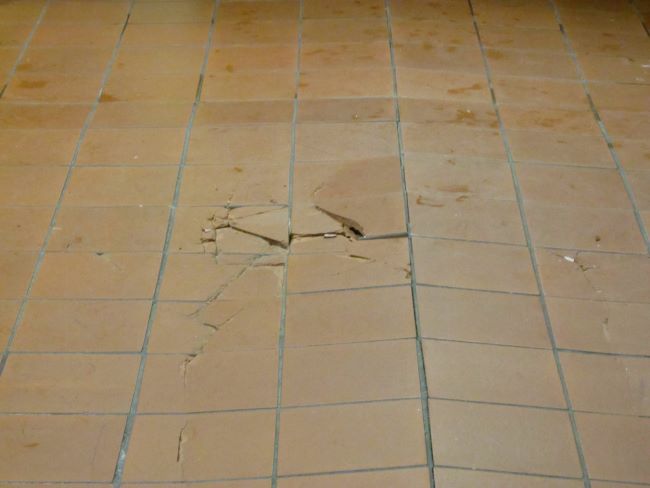
4.2 Temperature Requirements: “In areas, interior or exterior, where tile is to be set using cementitious mortars, the substrate temperature shall be maintained above 50°F (10°C) and below 100°F (38°C). When epoxy and/or furan setting materials are being used to set tile, the substrate temperature shall be maintained above 60°F (16°C) and below 90°F (32°C). Temperature shall be maintained for 72 hours after the completion of the tile installation.”
4.3 Protecting Work Areas: “General contractor must provide complete areas to tile contractor so that all work in each area may be completed, and no areas require remobilization or segmented protection of installation. The general contractor is responsible to keep spaces closed to traffic and other work in areas where tile is being set to ensure tile is not damaged. Tile contractor is not responsible for damage caused by other trades during the installation process.”
This standard gives the tile contractor full access to the work area and allows that work to be completed without interruption while eliminating expensive remobilization.
4.3.2 Protecting Work While Curing: “The tile installation shall be protected and traffic restricted once all work is complete and no pedestrian or wheeled traffic on new tile floor areas for 48 hours. Barricade all newly laid tile areas and remove barricades after 48 hours. When the tile contractor is responsible for protection of tile work, it shall be clearly outlined in the tile contract documents.”
4.3.3: “Keep all traffic off epoxy and furan installed floors for at least 72 hours after grouting, and heavy traffic off for at least seven days, unless otherwise specifically authorized by manufacturer.”
4.3.4 Protecting Completed/Work From Concentrated Loads: “When concentrated loads (scissor lifts, pallet jacks, automobiles, forklifts, and other heavy equipment) will be used on tile floor, the design professional shall specify up to 23/32-in. thick plywood or OSB protection over non-staining kraft paper to protect the floor and accommodate concentrated loads. General Contractor/Owner/Design Professional is responsible for protecting the tile work from damage.”
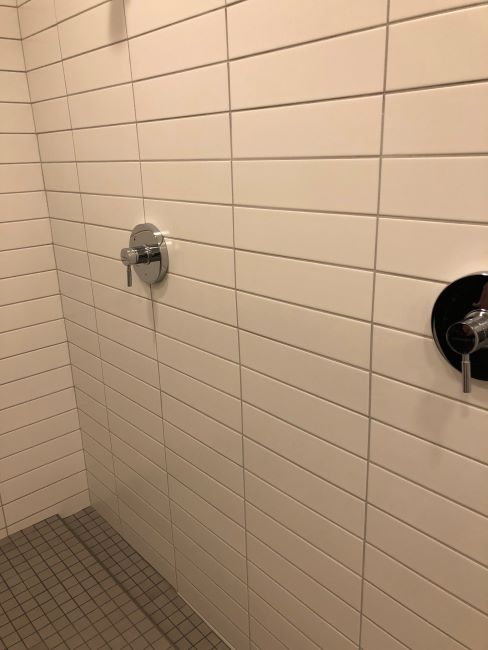
4.4.1 Penetrations in Completed Tile Assembly: “Penetrations into waterproofed tile assemblies should be avoided whenever possible. If waterproofed tile assemblies must be penetrated, it is recommended that penetrations be made away from the stream of water (e.g., water from a shower head). The party responsible for the penetration is also responsible for the treatment and/or repair of the penetration. Penetrations into waterproofed assemblies must be treated and/or repaired such that they remain waterproof.”
5.1 Lighting and Viewing Distance: “When visually inspecting finished tile installations, do so without magnification under the permanent intended lighting (artificial and/or natural) and without the use of additional lighting such as flashlights, spotlights, or temporary lights. View the installation no closer than 36 in. (0.9 m) from walls and no closer than 60 in. (1.5 m) from floors. Recognizing the hand-built aspect of tile installations, any aesthetic concerns not visible at these distances (but apparent at closer distances) are acceptable under industry best practices.”
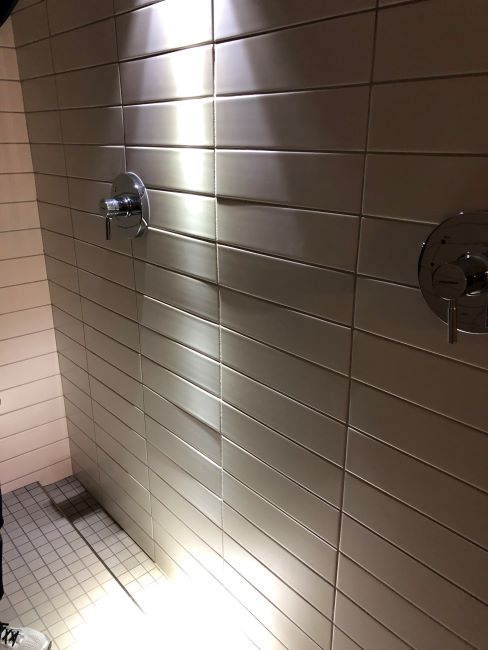
5.2.4 Effects of Lighting on Installation: “The use of wall-washer, cove-type, or lighting mounted on the wall surface can produce shadows and undesirable effects in tile work. Tile backing surfaces, installation materials and methods, surface flatness, and the location of light sources shall be specified to eliminate potential tile shadowing issues. Install permanent lights prior to the tile installation to provide the tile installer the maximum opportunity to reduce undesirable shadows.
Informative Note: If the lighting cannot be moved away from a tile wall, it is desirable to provide the finished lighting conditions prior to the tile installation. Even with this accommodation, some tiles will still exhibit shadows and inconsistencies that may be considered undesirable.”
These A108.01 standards were established to provide high-quality tile installations that will stand the test of time and protect the tile contractor. Use them wisely.

Scott Carothers
Scott Carothers is the Acdemic Director for the Ceramic Tile Education Foundation (CTEF) and is responsible for the creation of the Certified Tile Installer (CTI) program, and is involved in the creation of the Advanced Certifications for Tile Installers (ACT) program as well as providing training to others in the tile industry.
Carothers has been involved in the ceramic tile industry for nearly 40 years and was the owner of a successful retail and installation firm prior to CTEF. He has served as President and Chairman of the Board of the National Tile Contractors Association (NTCA), Chairman of the NTCA Technical Committee, was named the NTCA Tile Person of the Year in 2005, and the NTCA Ring of Honor recipient in 2013. He is a voting member of the ANSI and the TCNA Handbook committees.